"I eat the same five vegetables on rotation — I know I should diversify but I never plan it"
AI meal planning · USDA-verified
Feed Your Microbiome, One Plant at a Time
AI meal plans built around plant diversity, prebiotic-rich foods like onion, garlic, leek and oats, and fermented foods like kimchi, kefir, yogurt and sauerkraut. Designed for everyday gut wellness, not symptom management.
OUTCOME
THE CHALLENGE
"Eat for Your Gut" Sounds Great Until Wednesday
The microbiome research is exciting, but turning it into a real shopping list and weekly cooking schedule is the hard part most people skip.
"I keep buying kimchi or kefir and it goes off because I don't actually work it into meals"
"I want more fiber and more variety, but I don't know how to structure a week around that"
"I want microbiome-friendly eating, not another supplement marketed as a probiotic"
THE SOLUTION
What if Plant Diversity and Fermented Foods Were Built In?
Imagine a weekly plan that quietly rotates 30+ different plants, leans on prebiotic-rich onions, garlic, leeks and oats, and schedules small servings of fermented foods you'll actually eat.
WHY IT WORKS
What a Microbiome-Friendly Plan Looks Like
Real meals shaped around the dietary patterns most consistently linked to a diverse, resilient microbiome.
Built-in plant variety targeting around 30+ different plant foods per week
Prebiotic-rich allium foods like onion, garlic, leek and shallot in everyday recipes
Fiber diversity from legumes, whole grains, vegetables, fruits, nuts, seeds and herbs
Oats, barley and other beta-glucan-rich grains rotated into breakfasts and dinners
Small, regular servings of fermented foods: yogurt, kefir, kimchi, sauerkraut and miso
Polyphenol-rich foods like berries, dark leafy greens, herbs, spices and extra-virgin olive oil
Resistant-starch sources like cooled potatoes, green bananas and legumes built into meals
Plenty of legumes and pulses for soluble fiber and microbial fuel
Sensible everyday meals — not ultra-processed "gut health" products and powders
HOW IT WORKS
How It Works
Our AI makes healthy eating simple with a personalized, science-backed approach
STEP 01
Share Your Plant-Variety Baseline
Tell the AI about the plants you already eat, any intolerances, and how adventurous you want to be. The plan is designed for everyday gut wellness, not for managing specific symptoms — see your clinician for that.
STEP 02
Get a Diversity-First Blueprint
Receive a weekly plan that tracks plant variety, prebiotic foods and fermented foods so 30+ plants a week stops being a slogan and becomes a checklist.
STEP 03
Cook Real, Plant-Rich Meals
Follow simple recipes built around legumes, whole grains, vegetables, herbs and small fermented-food servings — designed to feel like normal cooking, not a cleanse.
STEP 04
Rotate Variety Over Time
Each week the plan rotates in different beans, grains, vegetables, herbs and fermented foods so your microbiome stays well-fed and your meals stay interesting.
REAL RESULTS
What People Want From a Gut-Friendly Plan
Common themes from users focused on microbiome diversity and everyday gut wellness.
I keep hearing "30 plants a week." I don't want to count manually — I want a plan that already does it.
Early user feedback
Plant-variety curious eater
Goal: built-in plant diversity
I buy fermented foods, they sit in the fridge, I forget. I want kimchi and kefir scheduled into my actual meals.
User story
Fermented-foods beginner
Goal: scheduled fermented servings
I want microbiome-friendly food, not another marketed probiotic supplement. Just give me the meals.
Community feedback
Long-term gut-wellness planner
Goal: food-first microbiome support
Your transformation starts here
Eat in a Way Your Microbiome Will Thank You For
Get an AI-built weekly plan with built-in plant diversity, prebiotic foods and small fermented-food servings. For everyday gut wellness — see a clinician for symptom-specific concerns.
No credit card requiredStart in under 3 minutes
BY THE NUMBERS
Why Plant Diversity Matters for Your Microbiome
Numbers below summarize themes from microbiome research, not platform claims about treating any condition.
30+
Different plant foods per week
associated with greater microbiome diversity in the American Gut Project
>=25 g/day
Dietary fiber commonly recommended
to support overall gut health and microbial fuel
Daily
Small servings of fermented foods
shown in a Stanford trial to increase microbiome diversity in healthy adults
Polyphenols
Plant chemicals fed to gut microbes
linked to favorable shifts in microbial composition in observational research
WHAT YOU GET
Designed Around Microbiome Science
Plant diversity, prebiotic foods, fermented foods and polyphenols — applied to your real week.
30+ Plants per Week Tracking
The plan rotates beans, grains, vegetables, fruits, nuts, seeds and herbs across the week so plant variety isn't accidental
Prebiotic Foods by Default
Onion, garlic, leek, oats, barley, legumes and other prebiotic-rich foods are woven into recipes rather than left as an afterthought
Fermented Foods on the Calendar
Small, regular servings of yogurt, kefir, kimchi or sauerkraut are scheduled into the plan — supported by research showing daily fermented foods can increase microbiome diversity
Polyphenols and Color Variety
Berries, dark leafy greens, herbs, spices and extra-virgin olive oil are quietly built into recipes for color, polyphenols and dietary quality
WHO IT'S FOR
Who Can Benefit?
Our AI meal planning serves a diverse community of health-conscious individuals and professionals
Plant-Variety Curious Eaters
People intrigued by "30 plants a week" who want a plan that actually tracks it for them
Families Building Better Patterns
Households wanting to introduce more vegetables, legumes and whole grains in a structured weekly way
Fermented-Foods Beginners
People new to kimchi, kefir, yogurt and sauerkraut who want help working them into normal meals
Fiber Maximizers
People aiming for steady, high-quality fiber intake from a wide range of plant foods rather than a single fiber supplement
Post-Antibiotic Recoverers
People focused on rebuilding everyday dietary patterns supportive of a diverse microbiome after antibiotic courses
Long-Term Gut-Wellness Planners
People focused on building a robust, plant-rich, microbiome-friendly eating pattern as a long-term habit
Explore Related Resources
Discover more tools and guides for your nutrition journey
Scientific sources
Selected references that inform the dietary patterns recommended on this page.
American Gut: an Open Platform for Citizen Science Microbiome Research
mSystems (American Society for Microbiology) · 2018
studyGut-microbiota-targeted diets modulate human immune status
Cell (Sonnenburg / Stanford) · 2021
studyThe International Scientific Association for Probiotics and Prebiotics consensus statement on the definition and scope of prebiotics
Nature Reviews Gastroenterology & Hepatology · 2017
consensusThe International Scientific Association for Probiotics and Prebiotics (ISAPP) consensus statement on fermented foods
Nature Reviews Gastroenterology & Hepatology · 2021
consensusInfluence of diet on the gut microbiome and implications for human health
Journal of Translational Medicine · 2017
reviewDietary fiber intake and gut microbiota in human health
Microorganisms · 2022
review
Recipes for this scenario
See all recipes →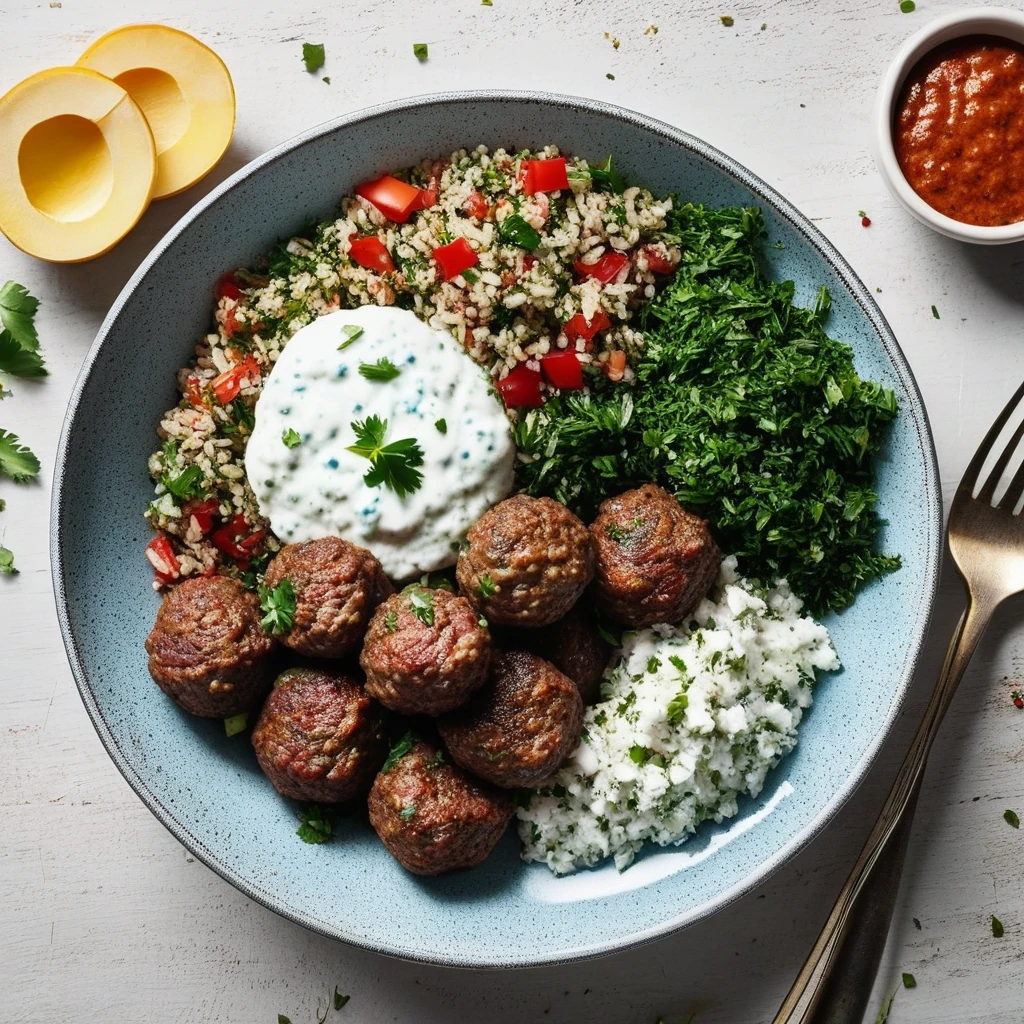
lunch
Grilled Lamb Kofta Bowl with Tabbouleh and Tzatziki
Seasoned lamb kofta skewers served over fresh tabbouleh salad with cucumber, tomatoes, and parsley, alongside creamy tzatziki sauce. A Mediterranean-inspired lunch with vibrant flavors.
No ratings yet
30 min900 kcal·P67g·C101g·F25g
afternoon_snack
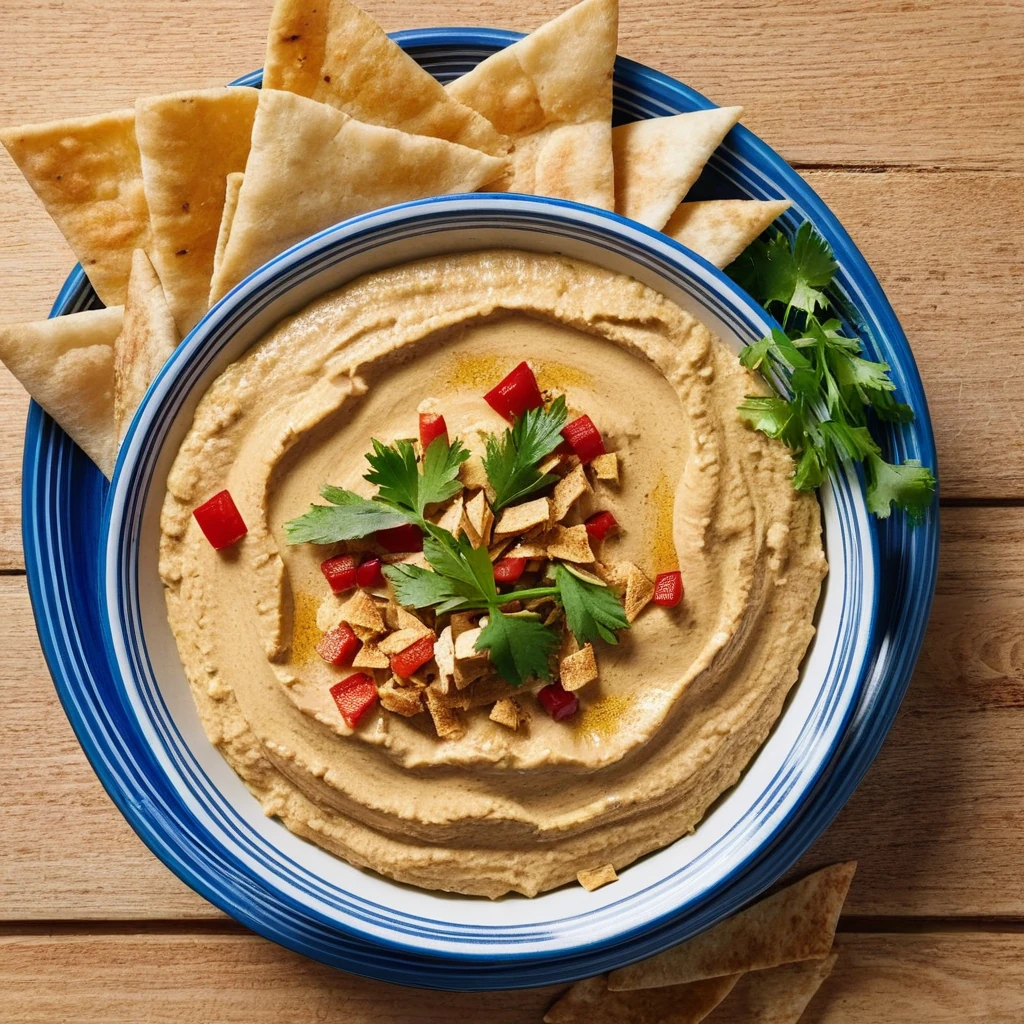
Hummus with Pita Chips
Creamy chickpea hummus served with crispy pita chips for dipping
No ratings yet
2 min117 kcal·P3g·C16g·F5g
lunch
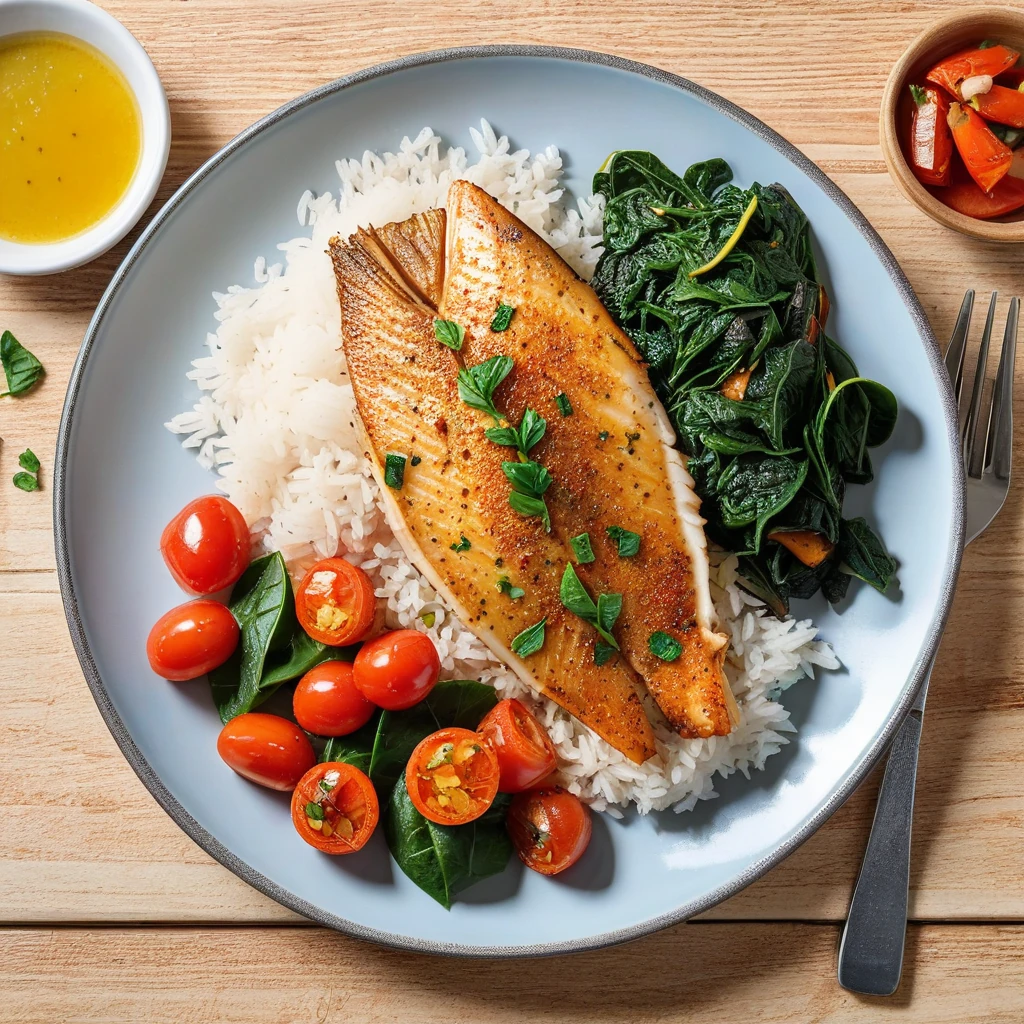
Baked Tilapia with Basmati Rice and Sautéed Vegetables
Flaky white fish served over fluffy basmati rice with fresh spinach and tomatoes
No ratings yet
20 min1134 kcal·P74g·C146g·F27g
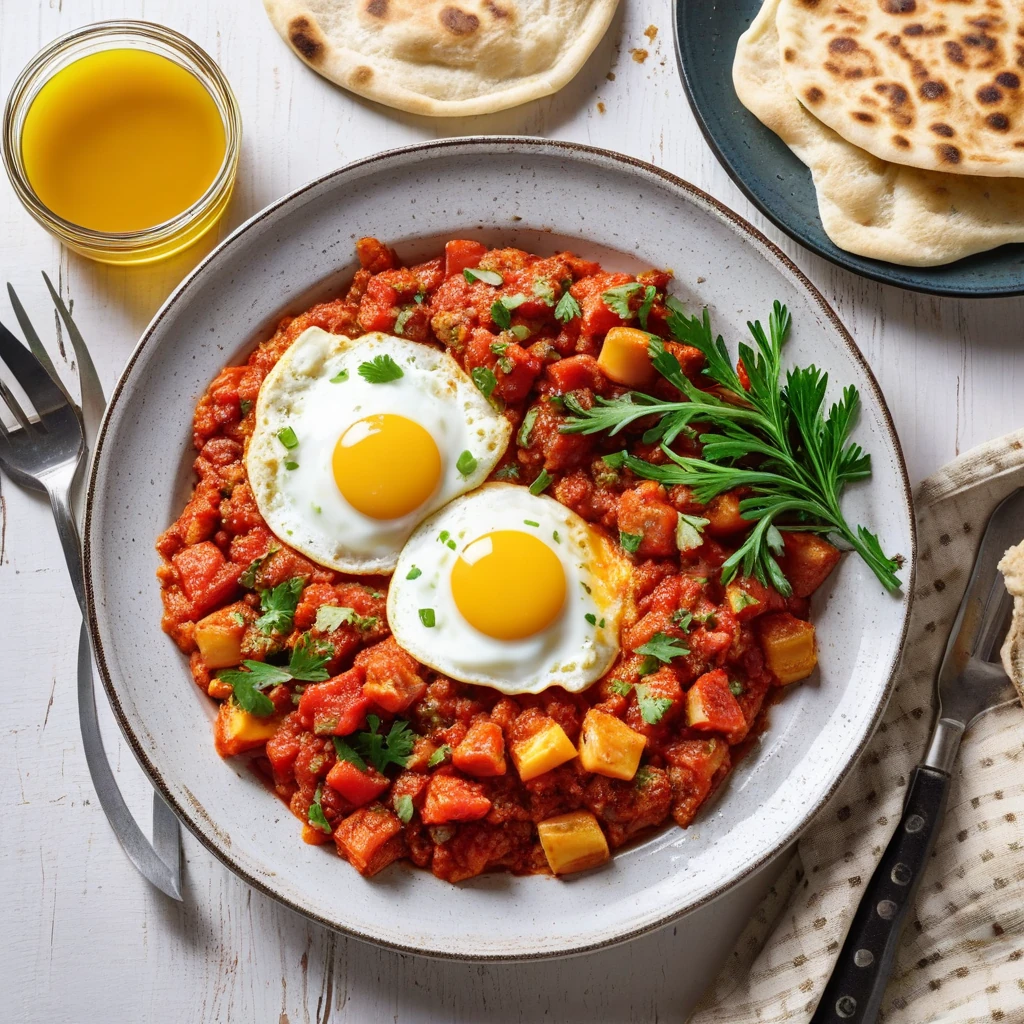
breakfast
Shakshuka with Whole Wheat Pita
Middle Eastern eggs poached in spiced tomato sauce, served with warm whole wheat pita bread
No ratings yet
15 min604 kcal·P25g·C85g·F21g
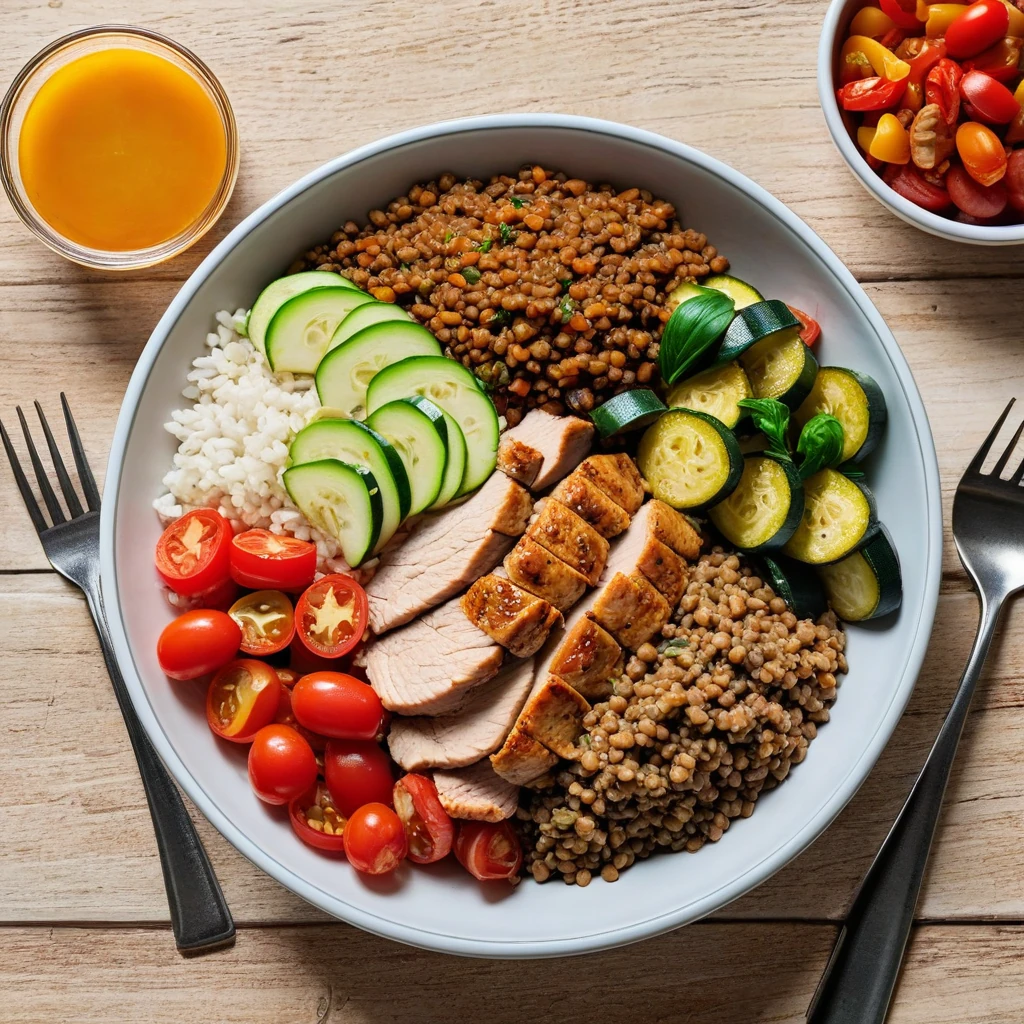
lunch
Turkey and Lentil Power Bowl
Lean ground turkey with red lentils, roasted vegetables, and tahini dressing over mixed greens
No ratings yet
35 min591 kcal·P43g·C64g·F16g
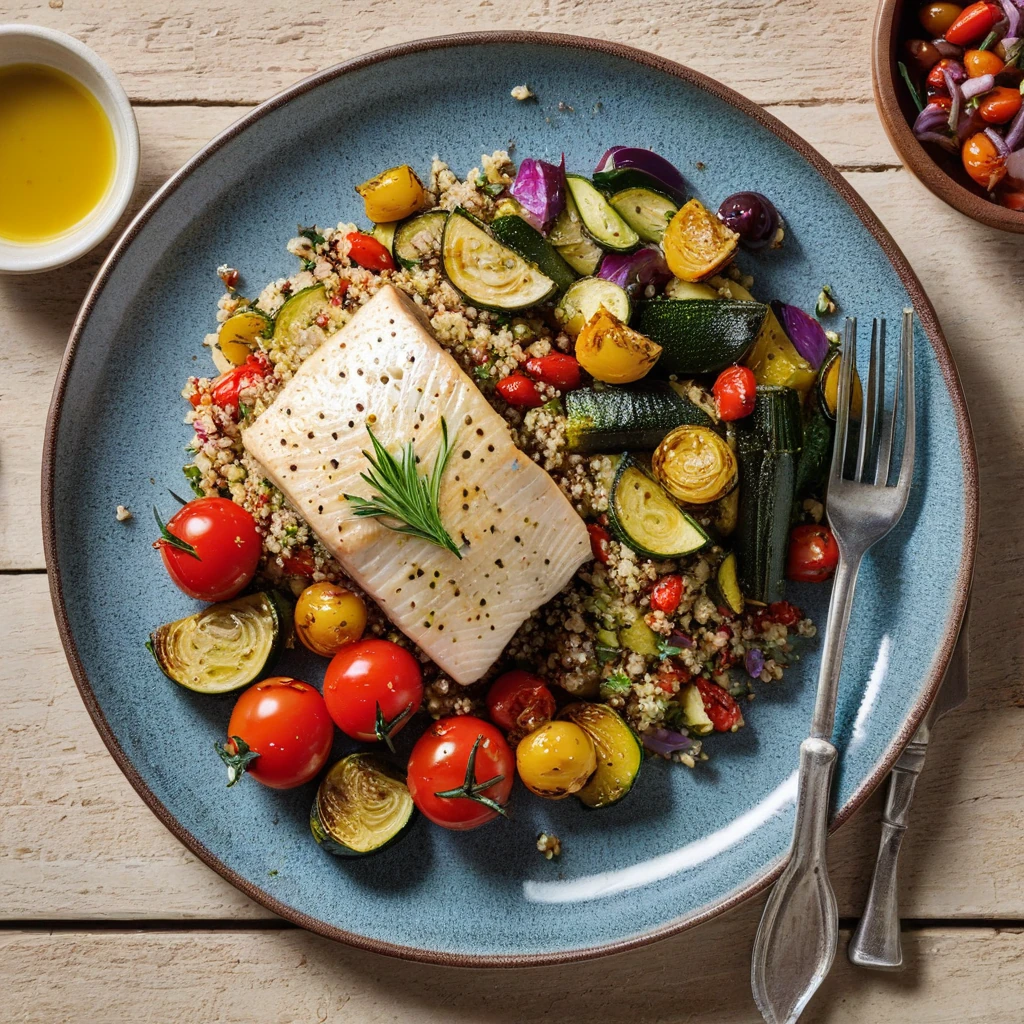
dinner
Mediterranean Baked Halibut with Quinoa and Roasted Vegetables
Flaky halibut with Mediterranean herbs, served with fluffy quinoa and colorful roasted vegetables
No ratings yet
40 min836 kcal·P66g·C98g·F24g
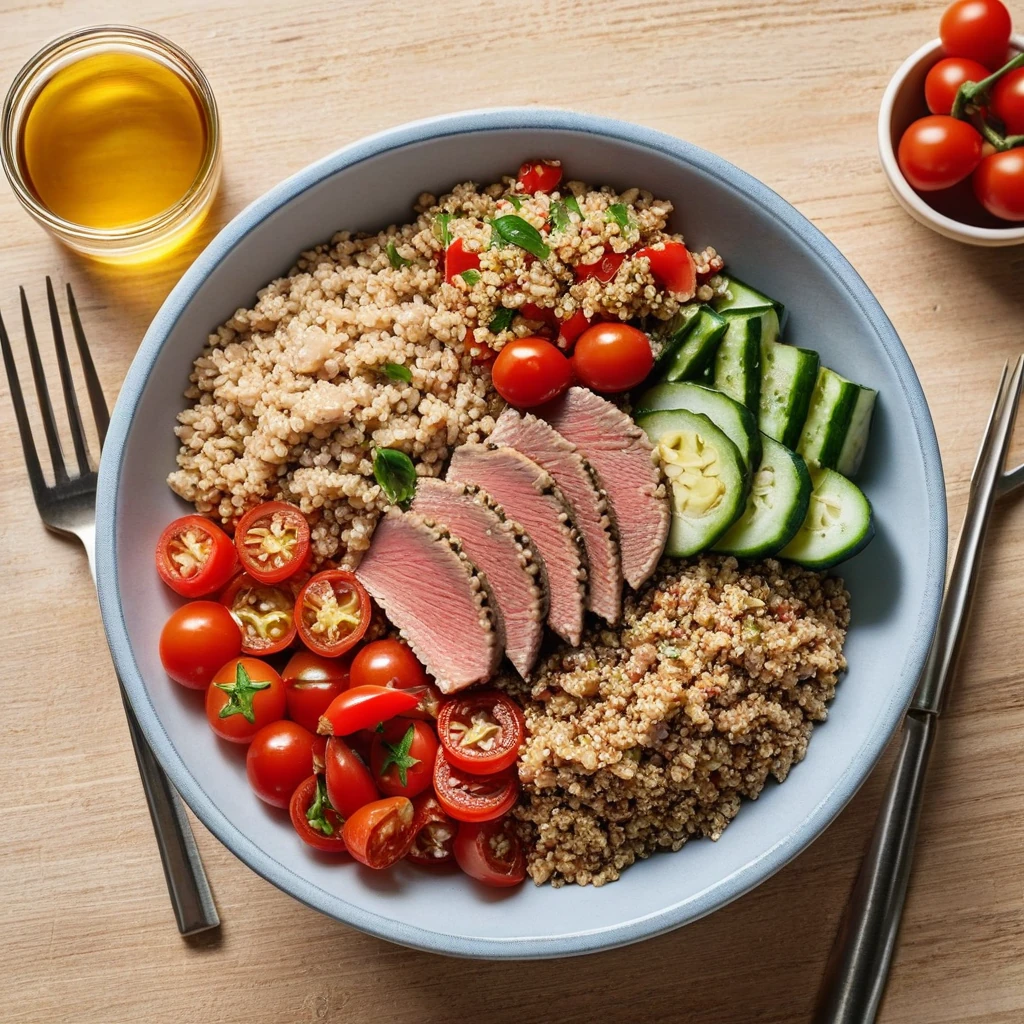
lunch
Mediterranean Tuna Bowl with Whole Grains
A colorful bowl featuring canned tuna, quinoa, roasted vegetables, and a lemon-herb dressing with fresh vegetables
No ratings yet
15 min812 kcal·P60g·C81g·F26g
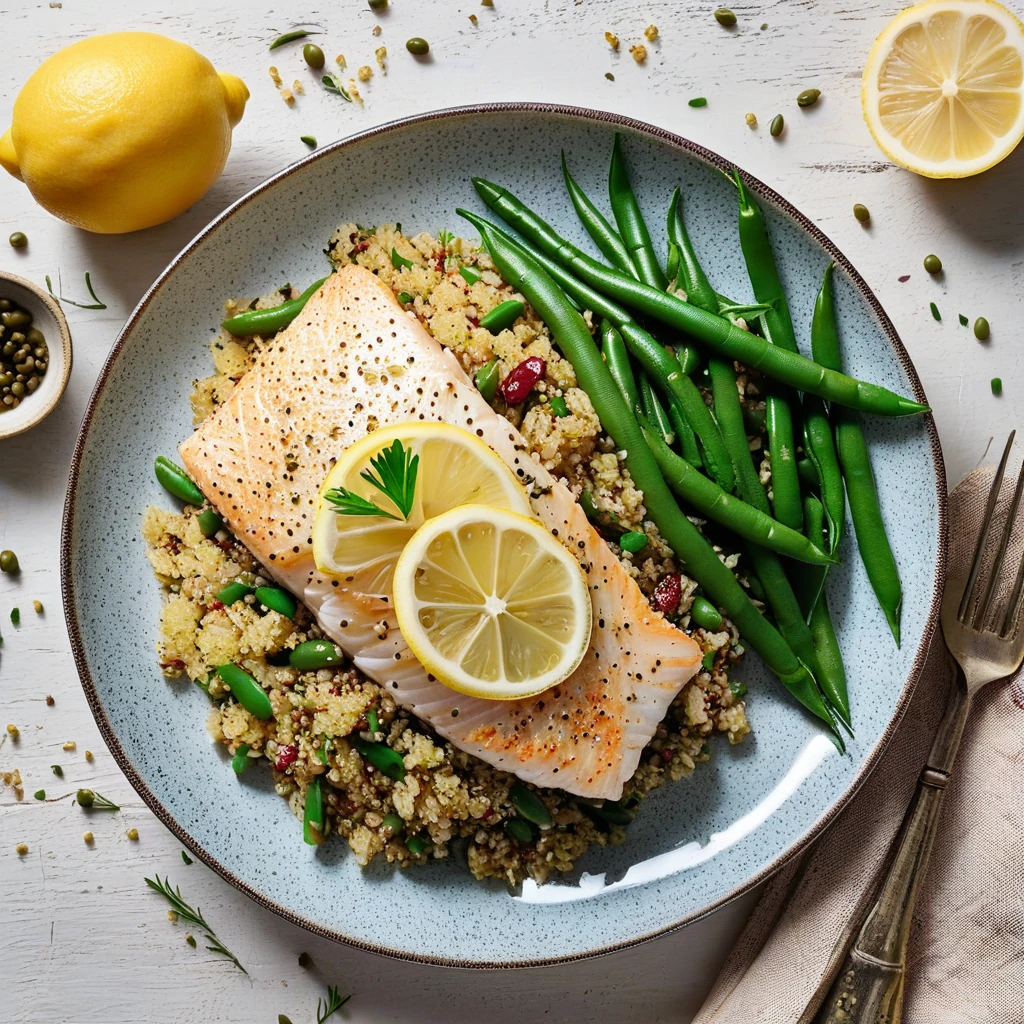
dinner
Lemon Herb Cod with Quinoa Pilaf and Green Beans
Flaky baked cod with Mediterranean herbs, fluffy quinoa pilaf, and tender green beans
No ratings yet
30 min555 kcal·P41g·C54g·F18g
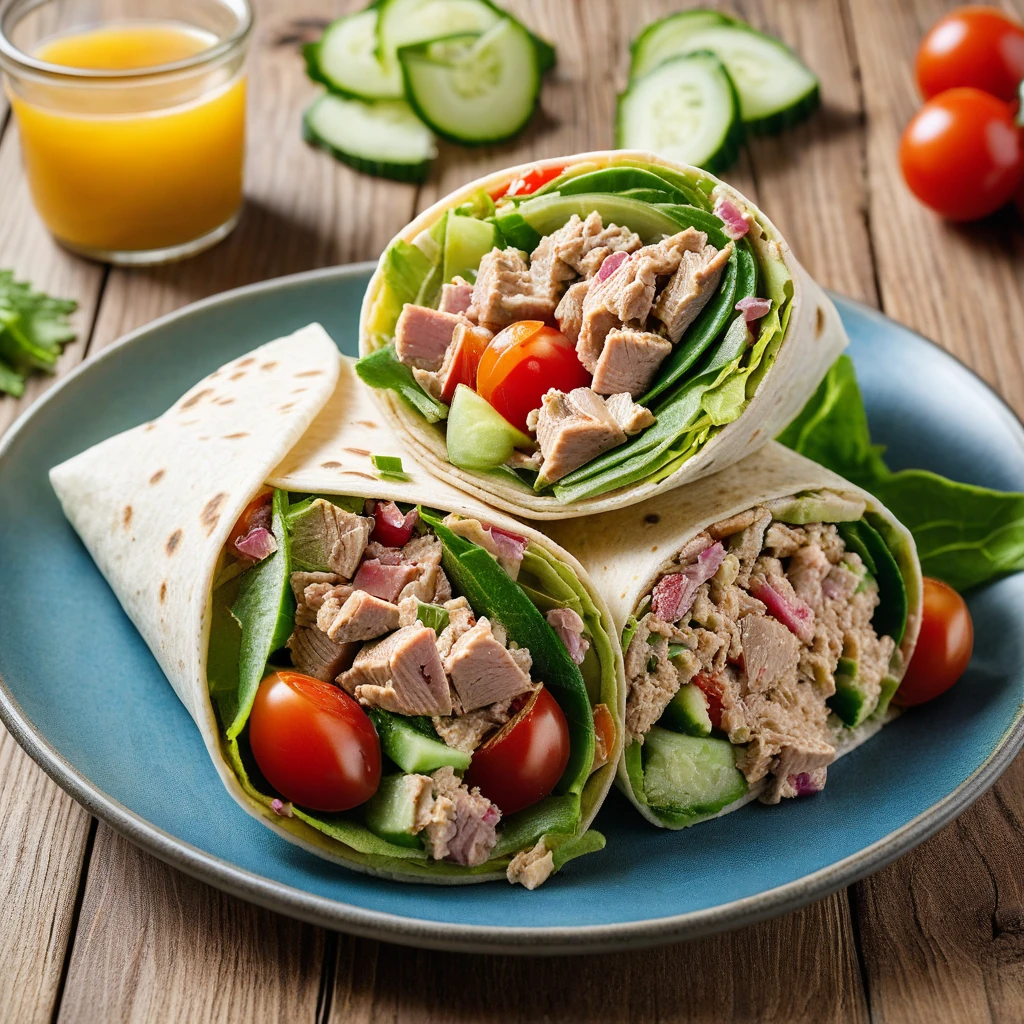
lunch
Mediterranean Tuna Salad Wrap
Flaked tuna mixed with fresh vegetables, feta cheese, and a light lemon vinaigrette, wrapped in a whole wheat tortilla with crisp greens
No ratings yet
10 min738 kcal·P45g·C83g·F24g
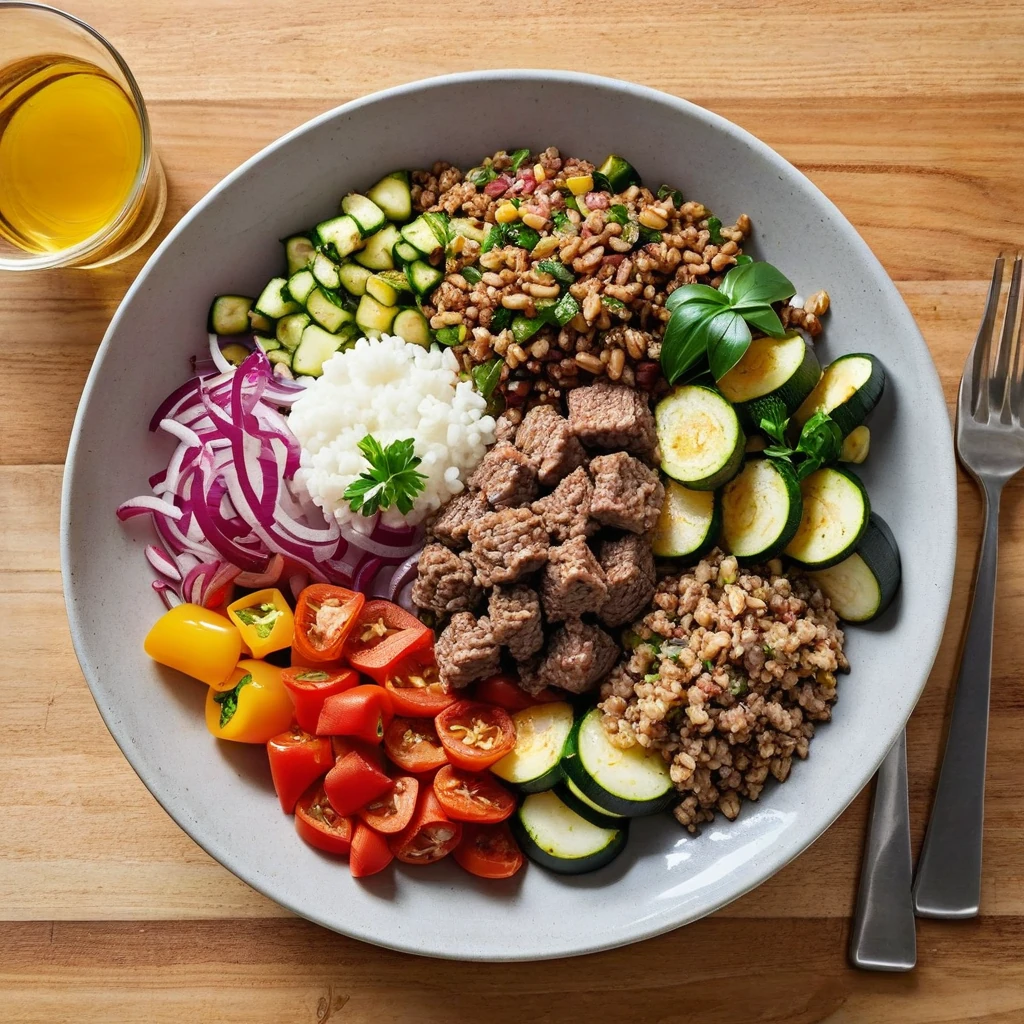
lunch
Lamb and Vegetable Grain Bowl
Seasoned ground lamb with roasted vegetables, farro, and tzatziki yogurt sauce
No ratings yet
45 min643 kcal·P50g·C76g·F19g
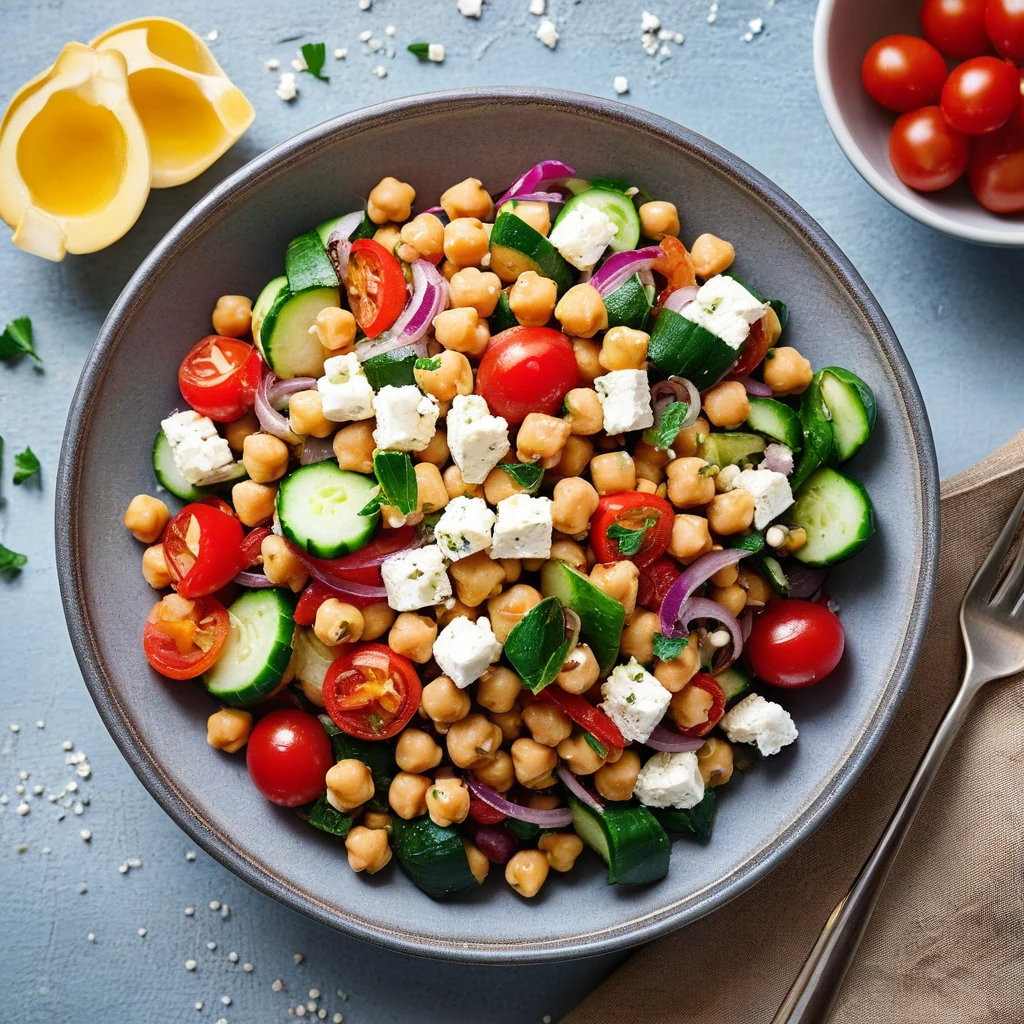
lunch
Mediterranean Chickpea and Vegetable Salad with Feta
Hearty salad with chickpeas, cucumber, tomatoes, bell peppers, red onion, and feta cheese, dressed with olive oil and lemon vinaigrette
No ratings yet
15 min580 kcal·P46g·C62g·F20g
lunch
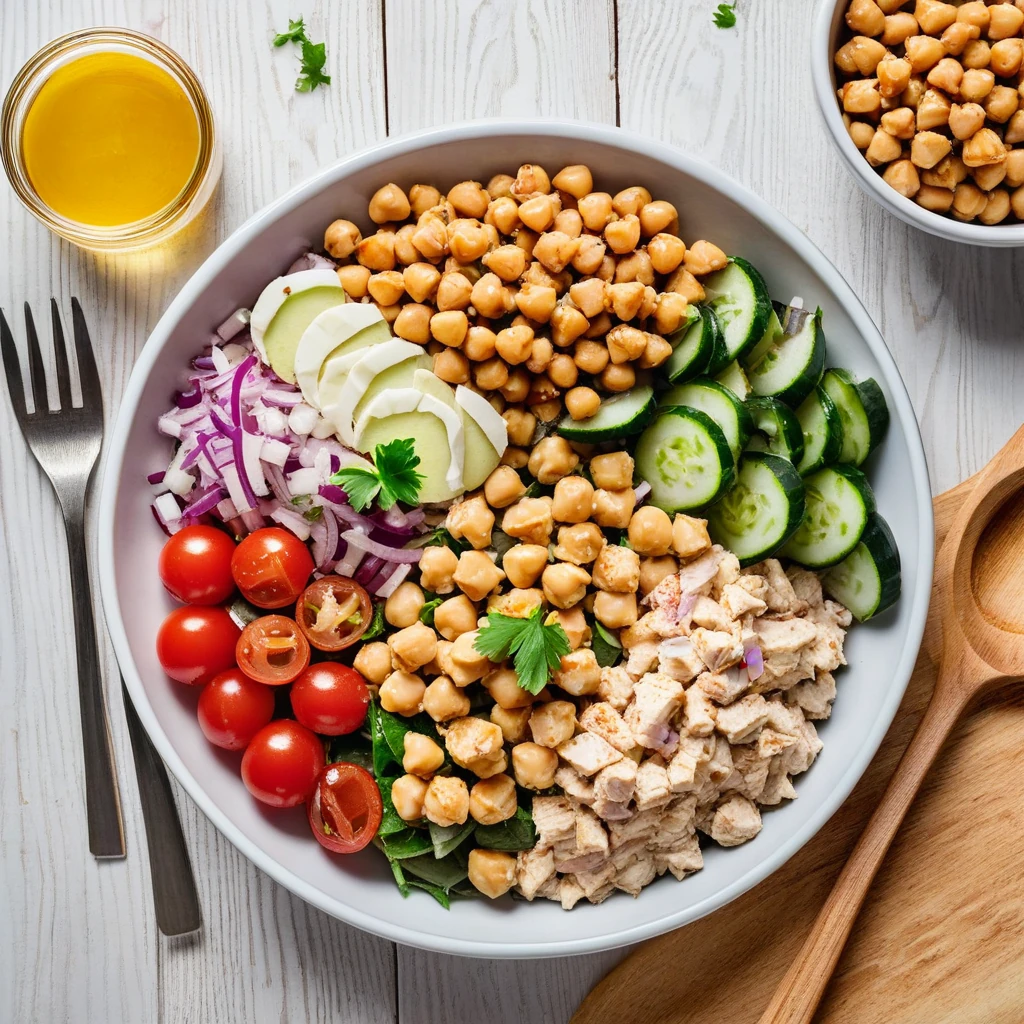
Mediterranean Chickpea and Chicken Salad with Pita
A hearty salad combining grilled chicken breast, chickpeas, cherry tomatoes, cucumber, red onion, and a lemon-herb vinaigrette, served with whole wheat pita bread.
No ratings yet
30 min598 kcal·P47g·C63g·F21g