"On hard days I can't think about cooking — and then I eat in a way that makes me feel worse."
AI meal planning · USDA-verified
Eat in a Way That's Kinder to Your Mind.
AI meal plans built around gut-brain nutrition, omega-3s, B-vitamins, and fermented foods — designed to complement, not replace, professional mental health care.
OUTCOME
THE CHALLENGE
Food and Mood Are Connected. Most Plans Ignore That.
When mood, anxiety, or low energy are part of your life, generic meal plans don't help. These are the gaps people describe most.
"I keep reading about the gut-brain axis but have no idea what to actually put on my plate."
"Caffeine, sugar swings, and skipped meals make my anxiety worse, but I can't sustain a strict plan."
"I want food that supports my mental health without it becoming another thing I'm 'failing' at."
THE SOLUTION
What if Your Weekly Plan Quietly Supported Your Mood?
Imagine simple, doable meals layered with the omega-3s, fiber, fermented foods, tryptophan, and B-vitamins that mood research keeps pointing to — built around days when you have less energy, not just your best days. Nutrition is a complement to professional care, not a replacement.
WHY IT WORKS
Nutrition That Supports How You Feel
Evidence-informed benefits when your week consistently includes mood-supportive foods.
Fewer blood-sugar swings linked to irritability and anxiety spikes
Regular omega-3 intake associated with mood support in research
Fermented and fiber-rich foods that support a healthier gut microbiome
Tryptophan and B-vitamin sources distributed across the week
Magnesium-rich foods to support relaxation and sleep onset
Lower reliance on ultra-processed foods linked to poorer mental health
Realistic 'low-energy day' meals you can still pull together when things are hard
Hydration and caffeine cues that don't worsen anxiety
A sustainable rhythm that fits real life, not a perfectionist diet
HOW IT WORKS
How It Works
Our AI makes healthy eating simple with a personalized, science-backed approach
STEP 01
Tell Us About Your Patterns
Share your energy, mood patterns, sleep, caffeine use, and any dietary preferences. The AI uses this to shape gentle, mood-aware meals.
STEP 02
Get a Mood-Supportive Plan
Receive a weekly plan layered with omega-3s, fiber, fermented foods, tryptophan, B-vitamins, and magnesium-rich ingredients — calibrated to your tastes.
STEP 03
Eat in a Way That Helps
Cook real meals built around foods linked to better mood and lower anxiety. Includes low-effort options for hard days, not just ideal ones.
STEP 04
Notice What Helps
Track mood, energy, and sleep alongside meals. The AI adapts your plan as you notice what genuinely makes a difference.
REAL RESULTS
What Users Want From Mood-Supportive Nutrition
Common feedback themes from people focused on mental wellbeing.
On bad days, cooking feels impossible. I want a plan that has me covered then — not just for the version of me who feels great.
Early user feedback
Adult navigating anxiety
Goal: low-effort mood-aware meals for hard days
Therapy helps. I just want food to stop working against me too. Something gentle, not another strict plan.
User story
Person in ongoing therapy
Goal: nutrition that complements professional care
I keep reading about the gut-brain axis but I have no clue what that means at the grocery store. I want it translated into actual meals.
Community feedback
Curious about gut-brain nutrition
Goal: gut-brain principles translated into real food
Your transformation starts here
Eat in a Way That's on Your Side
Build a weekly plan that supports mood, energy, and resilience — and keep your professional care team in the loop. Nutrition is one piece of the picture, not a replacement for treatment.
No credit card requiredStart in under 3 minutes
BY THE NUMBERS
Where the Mood-Nutrition Research Points
Findings from peer-reviewed studies on diet, the gut-brain axis, and mental wellbeing.
33%
Reduction in Depression Symptoms
in the SMILES trial after 12 weeks of Mediterranean-style dietary support (Jacka et al., 2017)
30%
Lower Risk of Depression
associated with higher adherence to Mediterranean-style diets (meta-analyses)
2+
Servings of Fermented Foods Per Week
as a commonly suggested target for microbiome support
1+
Serving of Leafy Greens Daily
for folate and B-vitamins linked to mood regulation
WHAT YOU GET
AI Tuned for Mood-Supportive Eating
Features designed specifically around the foods linked to better mental wellbeing.
Gut-Brain Aware Planning
Builds in fiber, fermented foods, and prebiotics that support a healthier microbiome and gut-brain communication.
Mood-Nutrient Layering
Distributes omega-3s, tryptophan, B-vitamins, and magnesium across the week through foods you actually enjoy.
Low-Energy-Day Meals
Includes ultra-simple options for hard days, so a low-mood week doesn't push you back into ultra-processed eating.
Caffeine and Sugar Awareness
Suggests meal timing and snack patterns that reduce blood-sugar crashes and caffeine-driven anxiety spikes.
WHO IT'S FOR
Who Can Benefit?
Our AI meal planning serves a diverse community of health-conscious individuals and professionals
Adults Managing Daily Stress
People navigating chronic stress who want eating patterns that don't make anxiety or low mood worse.
People Working With a Therapist
Those already in therapy or treatment who want nutrition to complement — not replace — professional mental health care.
Caregivers and Helpers
People supporting others who often deprioritize their own nourishment and want simple, mood-aware meals.
Adults Recovering From Burnout
Those rebuilding energy and emotional capacity, wanting steady nutrition that supports the recovery.
Shift Workers and Irregular Schedules
People whose sleep and meal timing are disrupted, wanting eating patterns that don't amplify mood swings.
Anyone Tired of Restrictive Plans
People who've tried strict diets and found they hurt their mental health, wanting a kinder, more sustainable approach.
Explore Related Resources
Discover more tools and guides for your nutrition journey
Scientific sources
Peer-reviewed references informing the mood-supportive nutrition recommendations on this page.
A randomised controlled trial of dietary improvement for adults with major depression (the 'SMILES' trial)
BMC Medicine (Jacka et al.) · 2017
studyMediterranean-style diet and risk of depression: a systematic review and meta-analysis
Molecular Psychiatry · 2018
meta-analysisThe role of the gut microbiota in brain function and behavior
Cell · 2014
reviewOmega-3 fatty acids for the treatment of depressive disorders: a meta-analysis
Translational Psychiatry · 2019
meta-analysisFermented foods, microbiota, and mental health: ancient practice meets nutritional psychiatry
Journal of Physiological Anthropology · 2014
reviewMagnesium intake and depression in adults
Journal of the American Board of Family Medicine · 2015
study
Recipes for this scenario
See all recipes →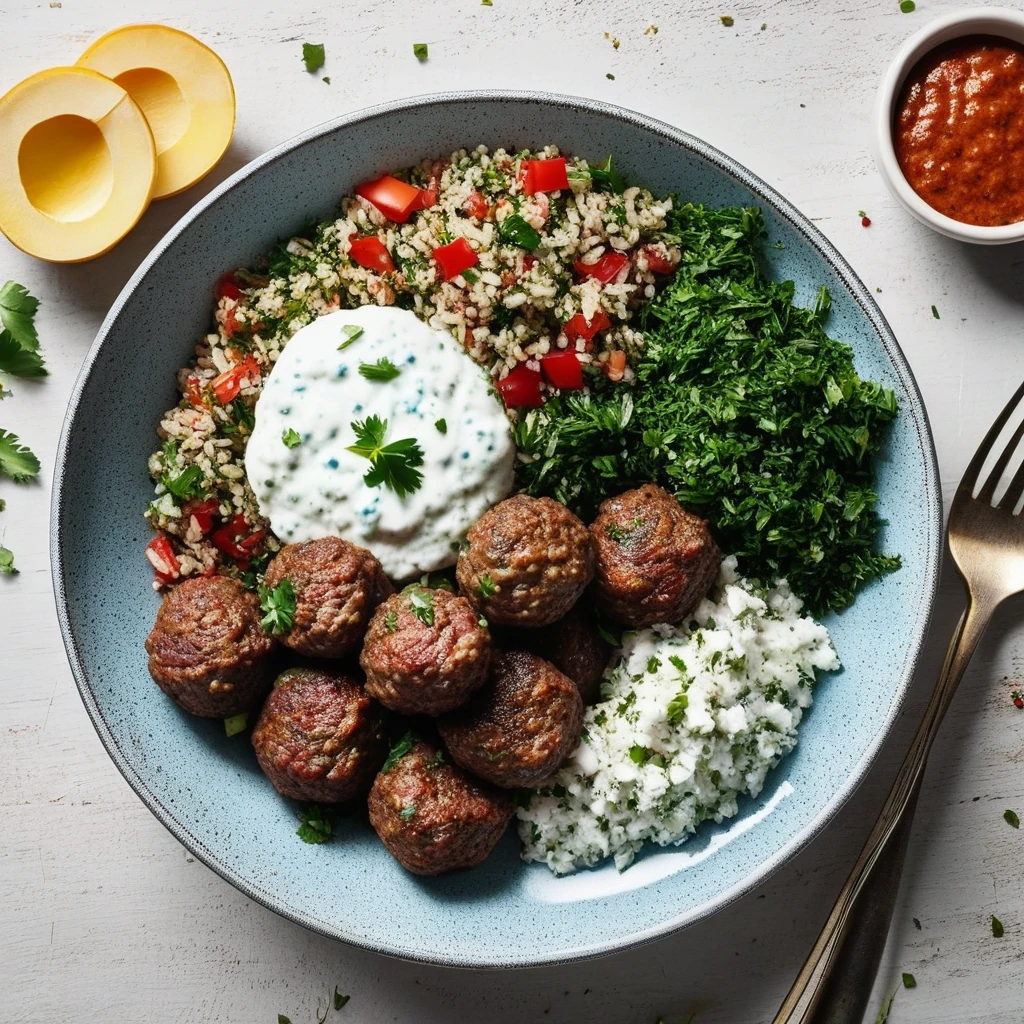
lunch
Grilled Lamb Kofta Bowl with Tabbouleh and Tzatziki
Seasoned lamb kofta skewers served over fresh tabbouleh salad with cucumber, tomatoes, and parsley, alongside creamy tzatziki sauce. A Mediterranean-inspired lunch with vibrant flavors.
No ratings yet
30 min900 kcal·P67g·C101g·F25g
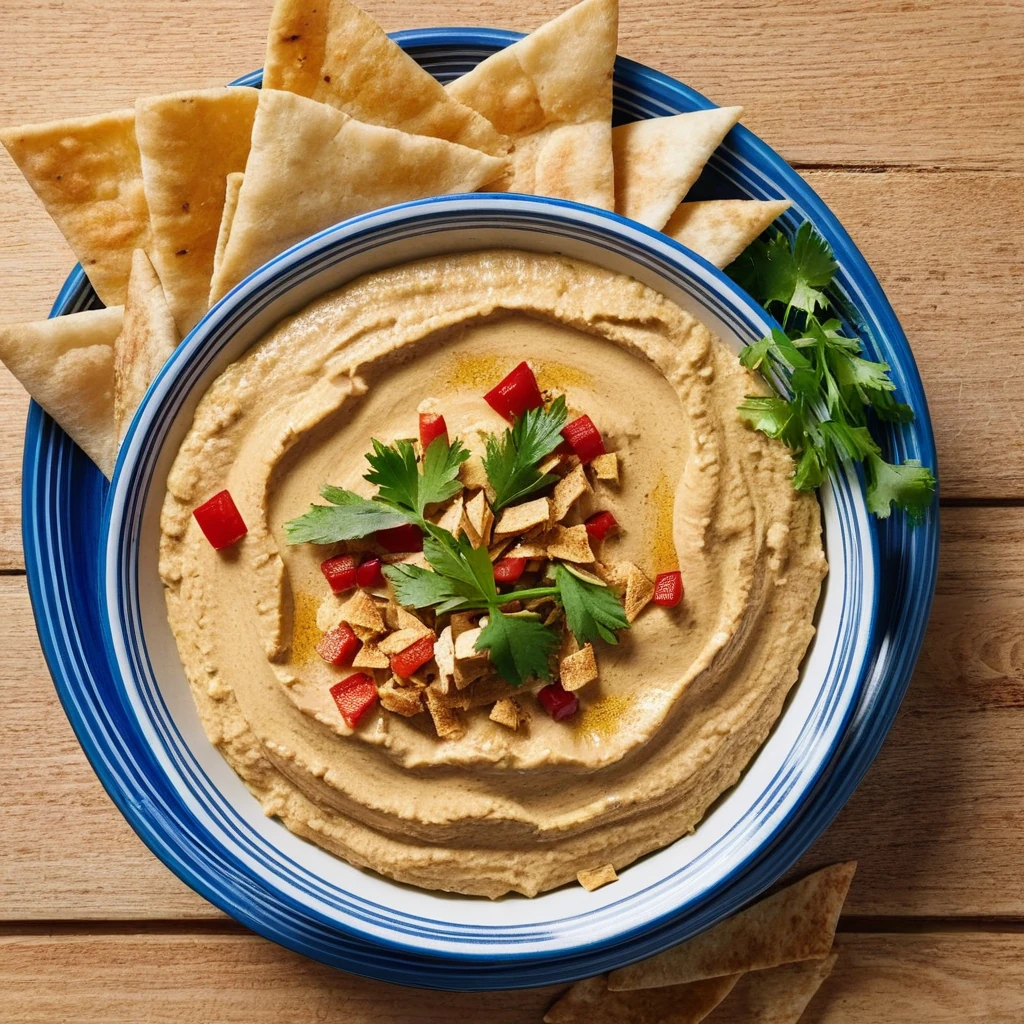
afternoon_snack
Hummus with Pita Chips
Creamy chickpea hummus served with crispy pita chips for dipping
No ratings yet
2 min117 kcal·P3g·C16g·F5g
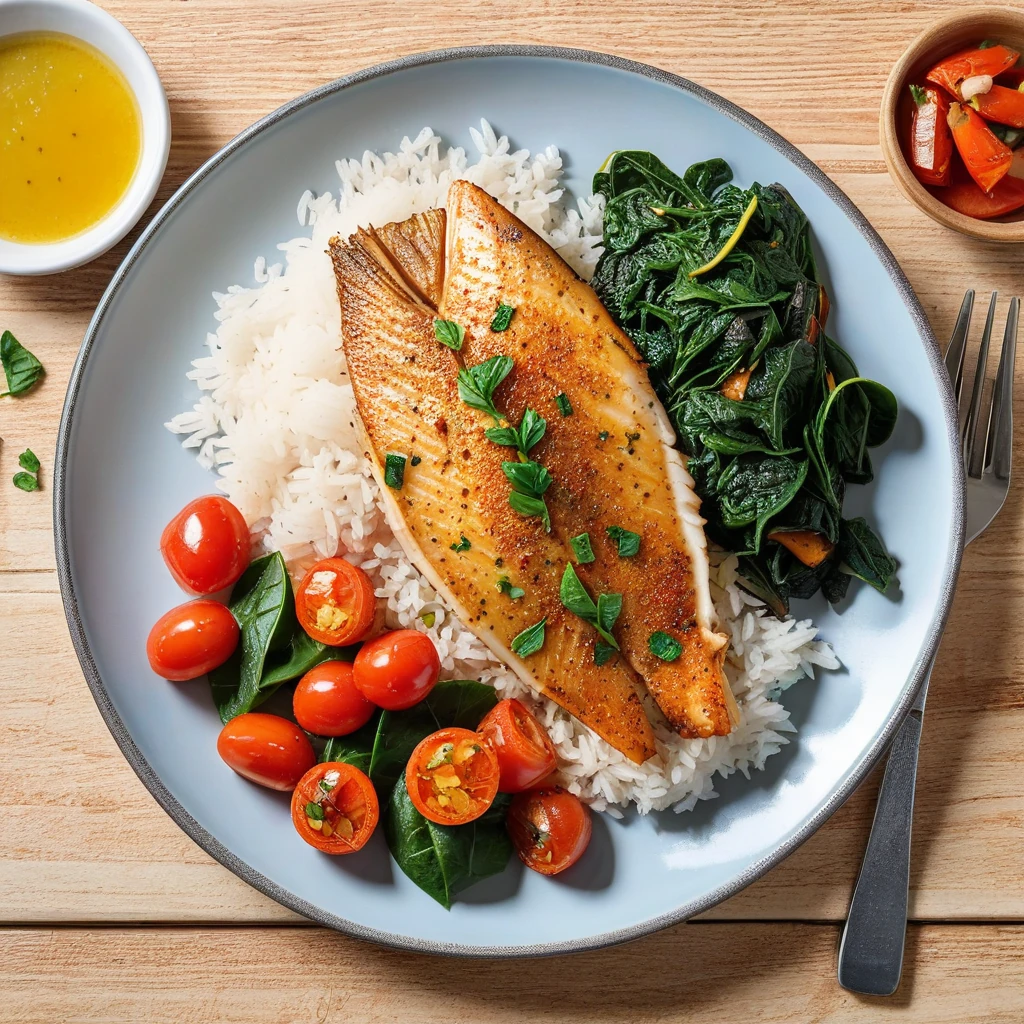
lunch
Baked Tilapia with Basmati Rice and Sautéed Vegetables
Flaky white fish served over fluffy basmati rice with fresh spinach and tomatoes
No ratings yet
20 min1134 kcal·P74g·C146g·F27g
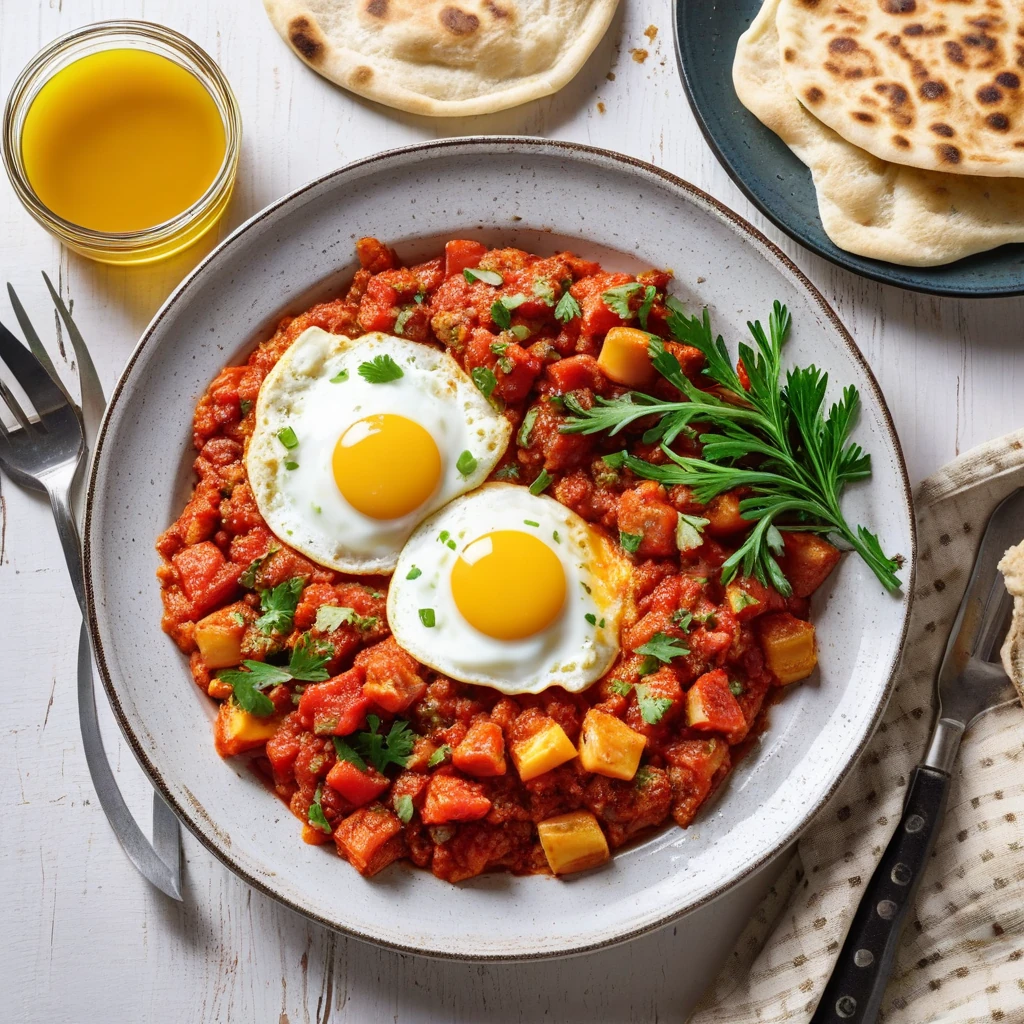
breakfast
Shakshuka with Whole Wheat Pita
Middle Eastern eggs poached in spiced tomato sauce, served with warm whole wheat pita bread
No ratings yet
15 min604 kcal·P25g·C85g·F21g
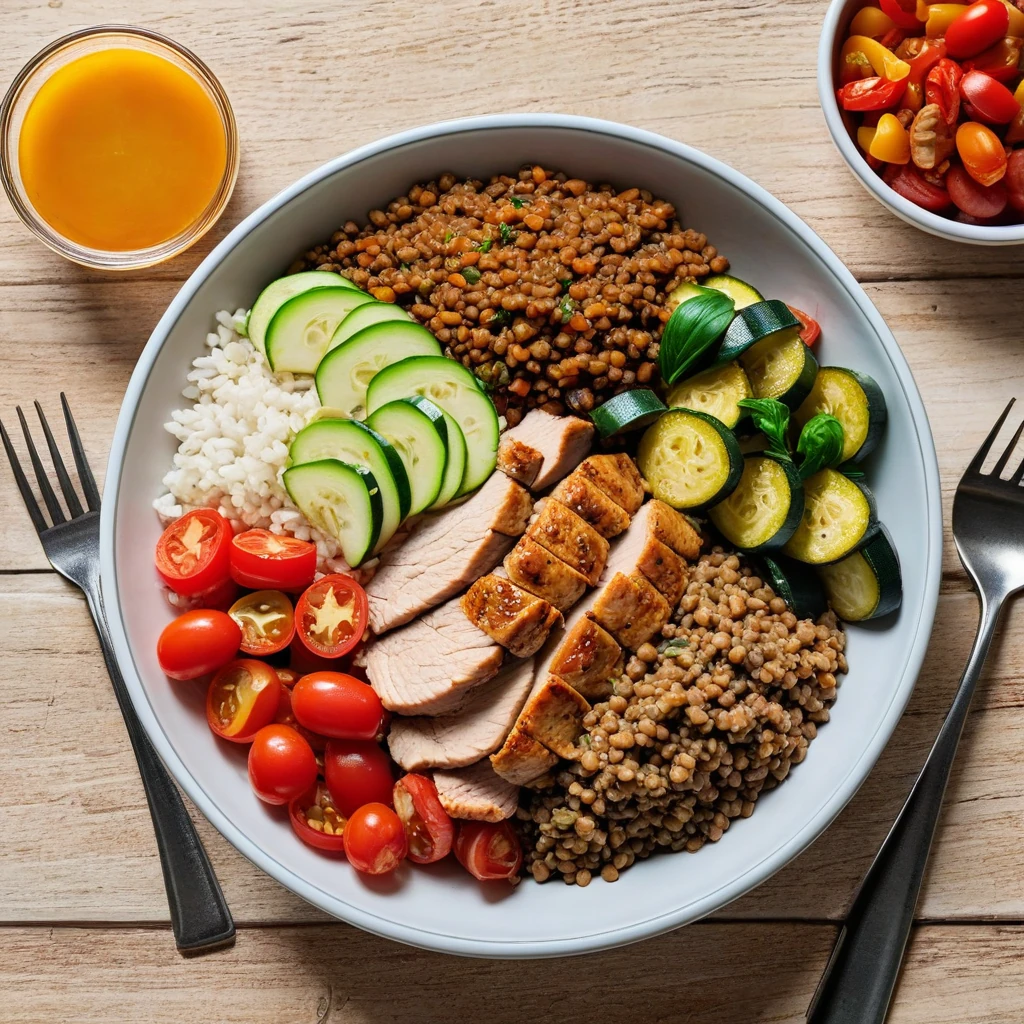
lunch
Turkey and Lentil Power Bowl
Lean ground turkey with red lentils, roasted vegetables, and tahini dressing over mixed greens
No ratings yet
35 min591 kcal·P43g·C64g·F16g
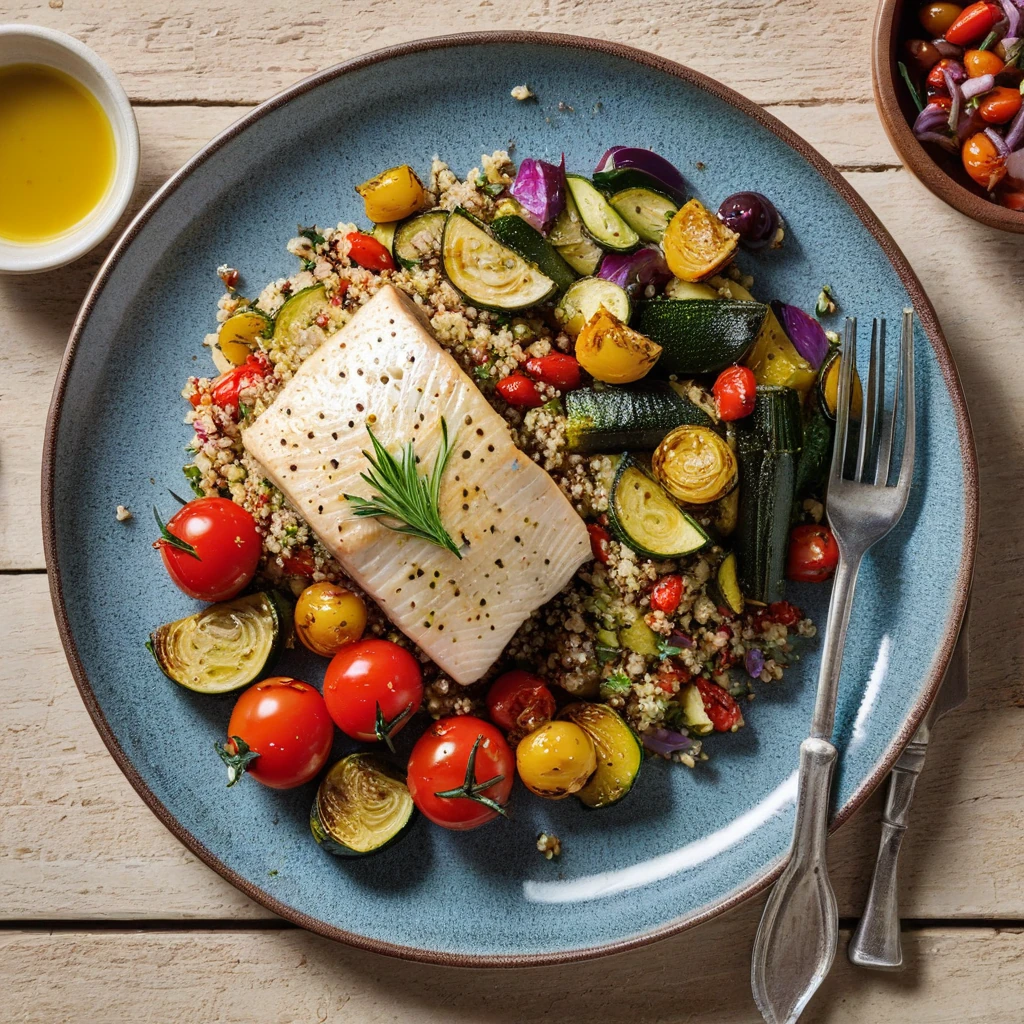
dinner
Mediterranean Baked Halibut with Quinoa and Roasted Vegetables
Flaky halibut with Mediterranean herbs, served with fluffy quinoa and colorful roasted vegetables
No ratings yet
40 min836 kcal·P66g·C98g·F24g
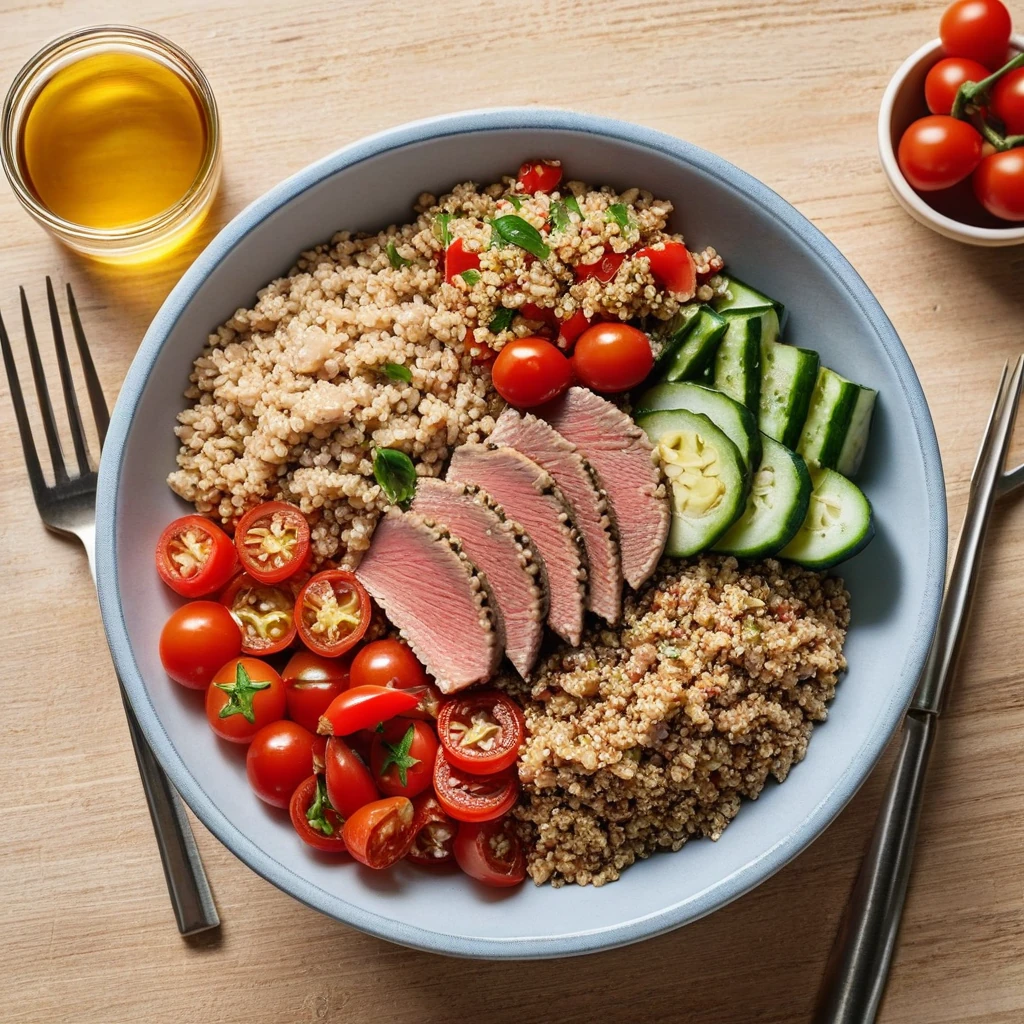
lunch
Mediterranean Tuna Bowl with Whole Grains
A colorful bowl featuring canned tuna, quinoa, roasted vegetables, and a lemon-herb dressing with fresh vegetables
No ratings yet
15 min812 kcal·P60g·C81g·F26g
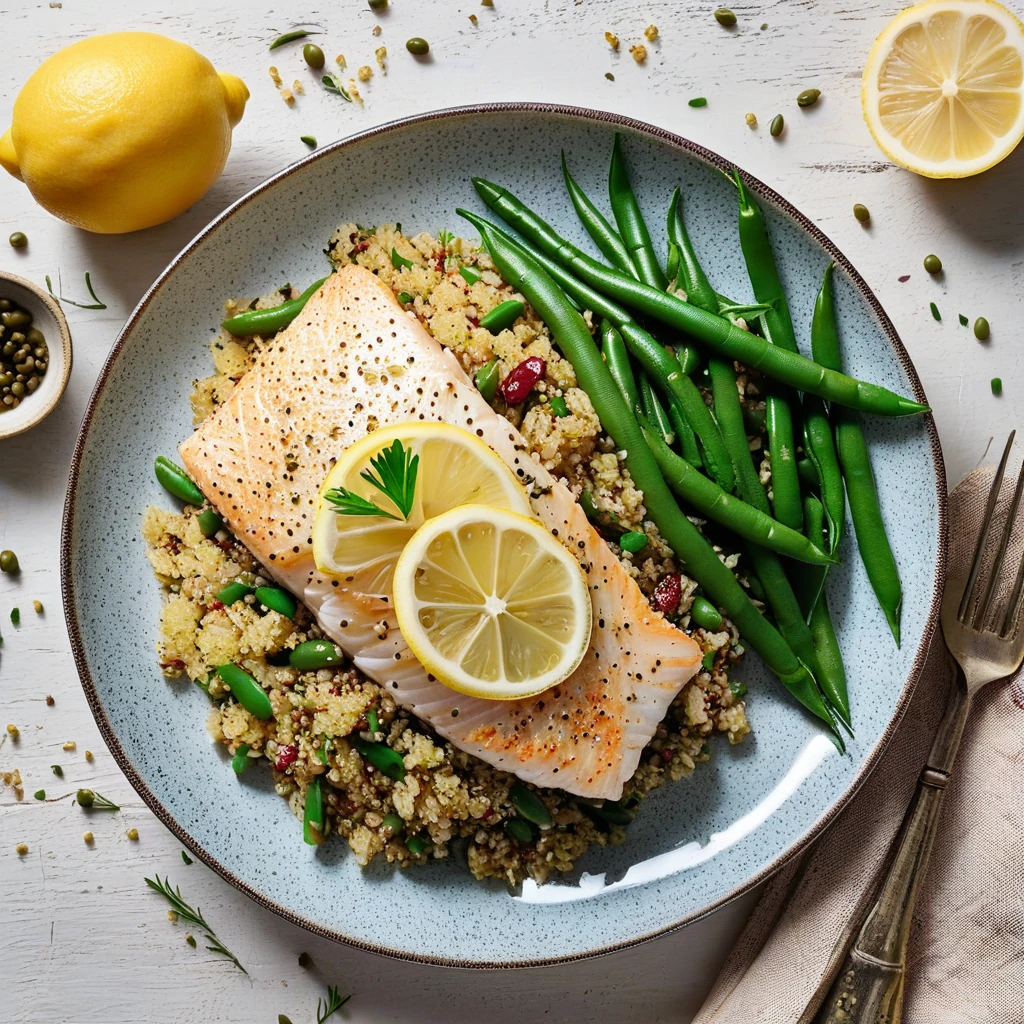
dinner
Lemon Herb Cod with Quinoa Pilaf and Green Beans
Flaky baked cod with Mediterranean herbs, fluffy quinoa pilaf, and tender green beans
No ratings yet
30 min555 kcal·P41g·C54g·F18g
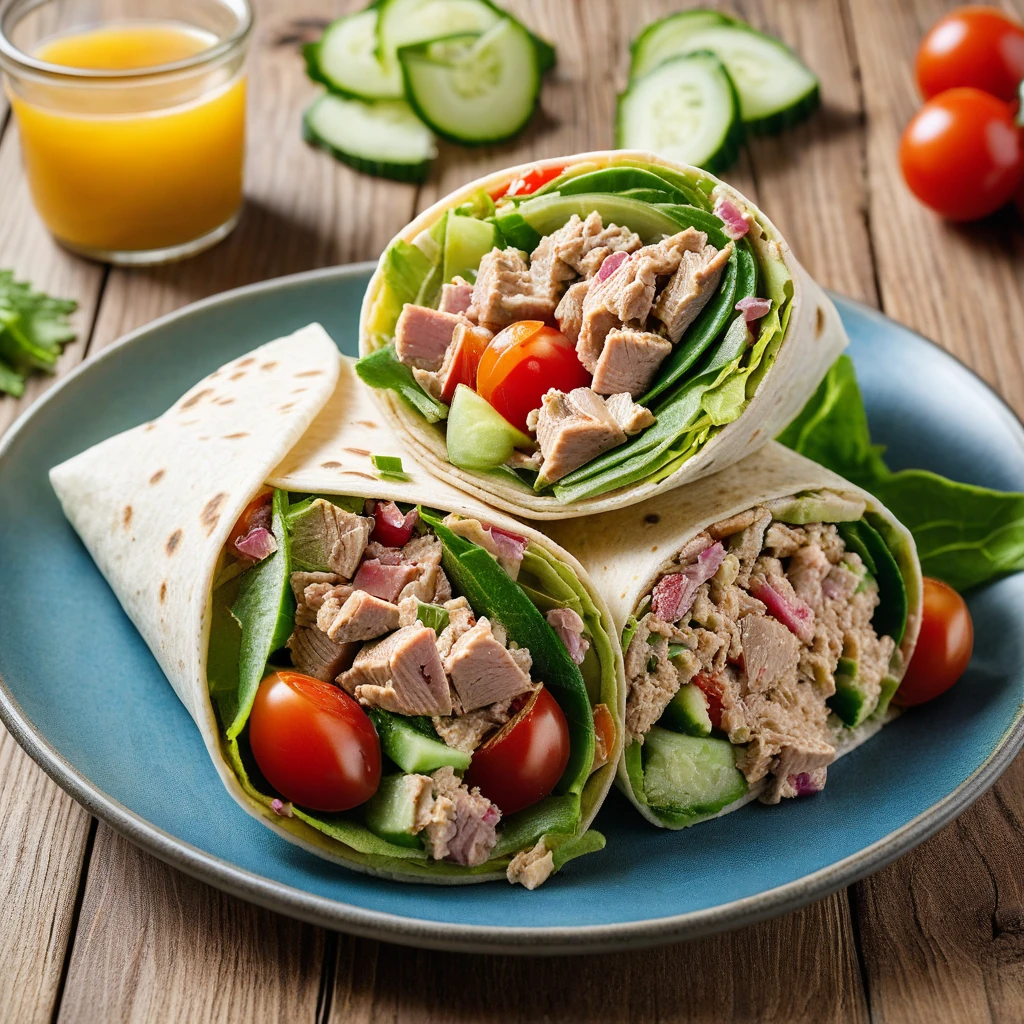
lunch
Mediterranean Tuna Salad Wrap
Flaked tuna mixed with fresh vegetables, feta cheese, and a light lemon vinaigrette, wrapped in a whole wheat tortilla with crisp greens
No ratings yet
10 min738 kcal·P45g·C83g·F24g
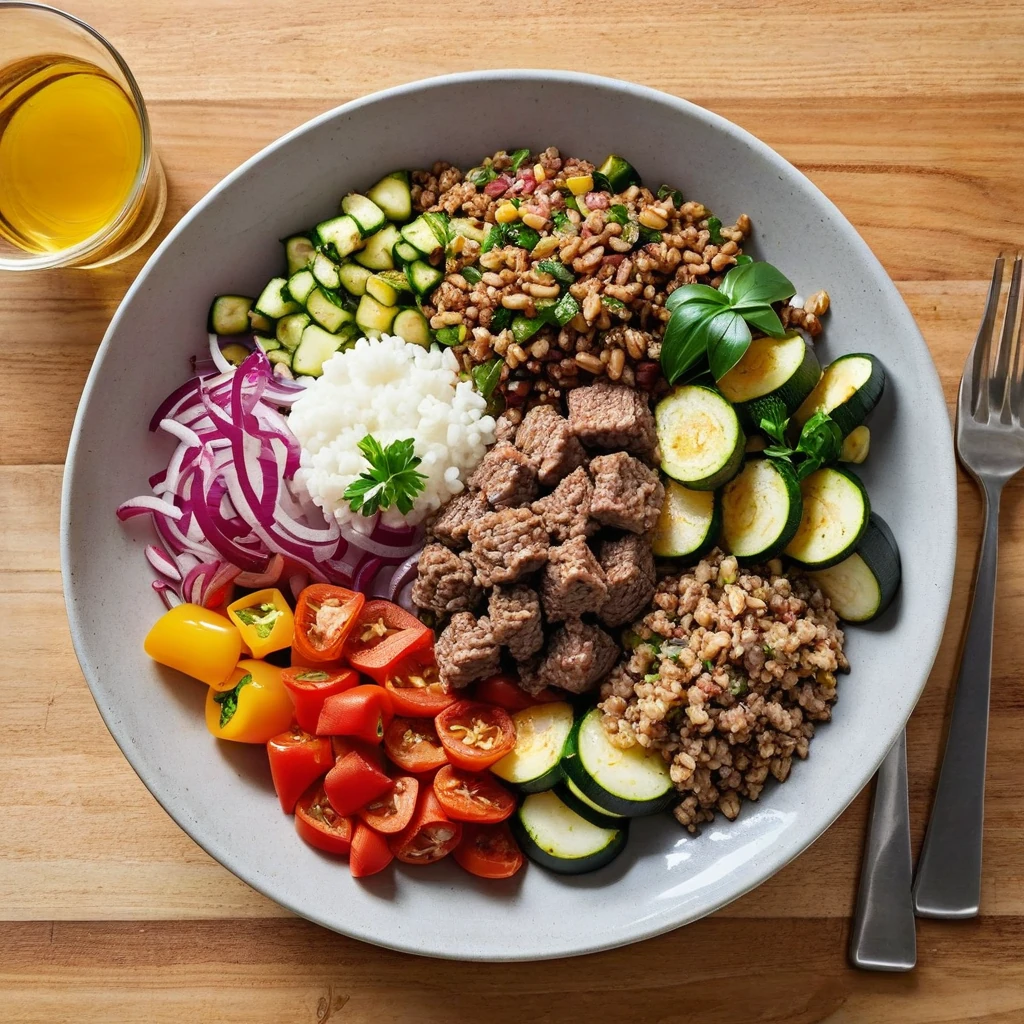
lunch
Lamb and Vegetable Grain Bowl
Seasoned ground lamb with roasted vegetables, farro, and tzatziki yogurt sauce
No ratings yet
45 min643 kcal·P50g·C76g·F19g
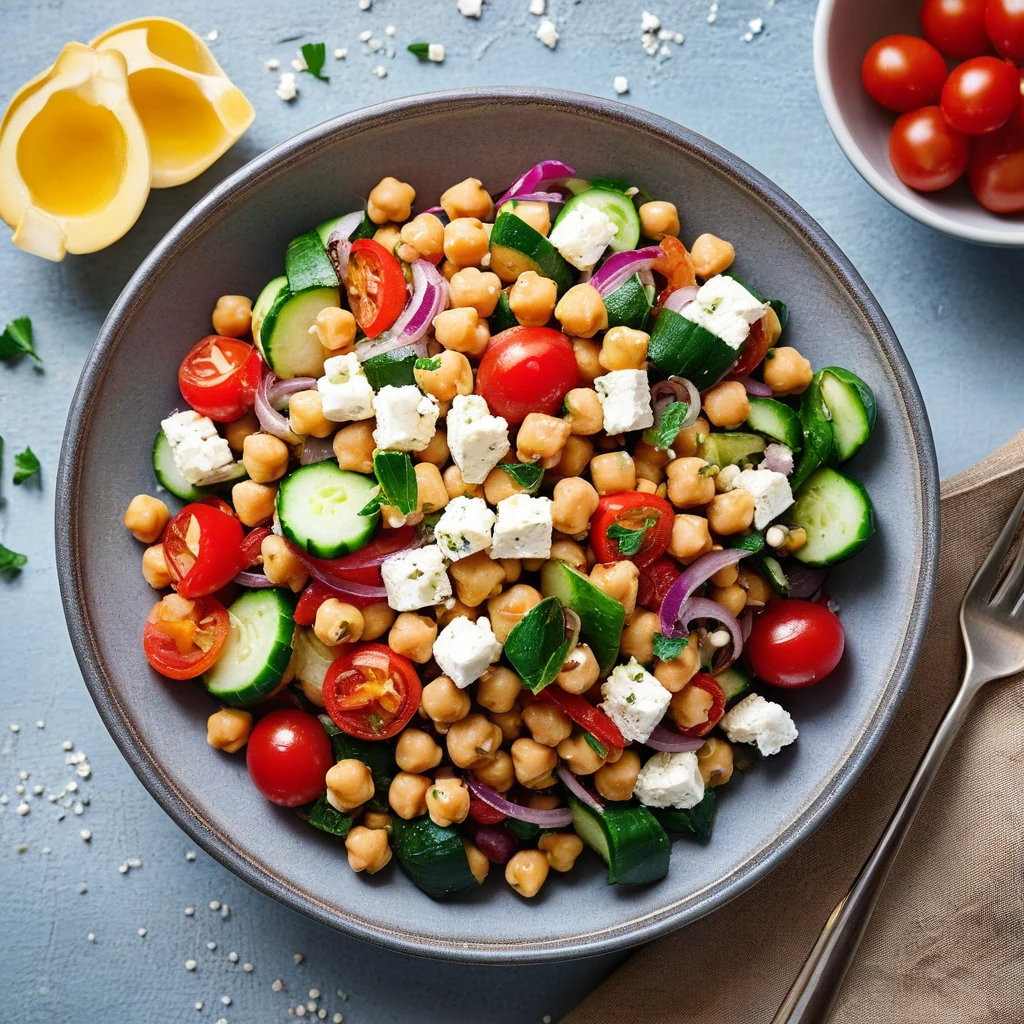
lunch
Mediterranean Chickpea and Vegetable Salad with Feta
Hearty salad with chickpeas, cucumber, tomatoes, bell peppers, red onion, and feta cheese, dressed with olive oil and lemon vinaigrette
No ratings yet
15 min580 kcal·P46g·C62g·F20g
lunch
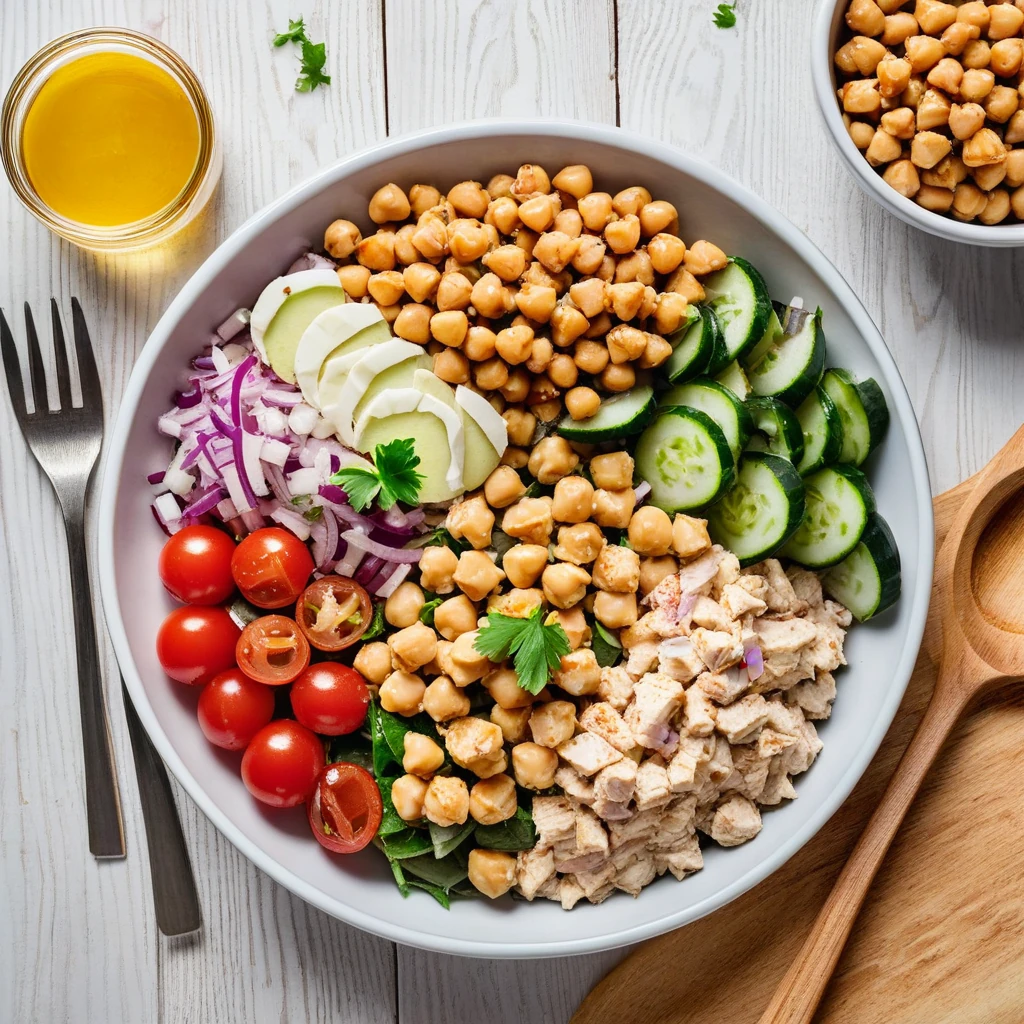
Mediterranean Chickpea and Chicken Salad with Pita
A hearty salad combining grilled chicken breast, chickpeas, cherry tomatoes, cucumber, red onion, and a lemon-herb vinaigrette, served with whole wheat pita bread.
No ratings yet
30 min598 kcal·P47g·C63g·F21g