"I train 6 days a week but hit performance plateaus because my fueling isn't dialed in for my specific sport"
AI meal planning · USDA-verified
AI sport nutrition: macro-optimized meal plans for athletes
AI sport nutrition for athletes — automated meal plans built around training load, with USDA-backed macros and pre/post-workout timing baked into every plan.
PROFESSIONAL
THE CHALLENGE
Why generic meal plans fail athletes
You train hard, but template meal plans don't shift macros with your training load — so fueling and recovery never quite match the work you actually did.
"I bonk during competitions and never feel like I'm maximizing my energy systems properly"
"Recovery takes too long between sessions - I know nutrition is the missing piece but don't know how to optimize it"
"I see other athletes with better nutrition strategies dialing in results while I struggle with the same generic advice"
THE SOLUTION
Macros that match the session you actually did
AI sport nutrition adjusts daily macros and meal timing to your training load — higher-carb meals around hard sessions, leaner days when volume drops.
WHY IT WORKS
What changes when nutrition tracks training load
Concrete shifts athletes see when meal plans adapt to weekly volume, intensity, and competition timing.
Pre-competition fueling tuned to event distance and duration so glycogen is topped off without GI distress
Post-workout meals scheduled inside the 2-hour recovery window with the right protein and carb amounts for the session
Carb intake scales with training volume so you don't bonk on long sessions or carry extra fuel on rest days
Body-composition targets handled alongside performance — hold power-to-weight without crashing energy
Caffeine, sodium, and meal-spacing slots flagged so high-pressure sessions land with steady energy and focus
Hard-day, easy-day, and rest-day calorie targets shift automatically to support adaptation, not just intake
Hydration and electrolyte targets matched to sweat rate, climate, and session length
Periodization built in: base, build, peak, and taper weeks each get their own macro pattern
Recipe and grocery lists rebuild themselves when the plan shifts, so the food you buy matches the plan you train on
HOW IT WORKS
How It Works
Our AI makes healthy eating simple with a personalized, science-backed approach
STEP 01
Athlete profile
Share your sport, weekly schedule, competition calendar, body-composition goal, and current performance metrics. The AI uses this as the baseline for macros and timing.
STEP 02
Plan built around training load
Get a sport-specific plan with daily macros, pre/post-workout meals, and recovery slots — calibrated to the energy systems your sport actually taxes.
STEP 03
Race-week and rest-day handling
The plan shifts for race week, double-session days, and easy weeks — so fueling, recovery, and weight management stay aligned with your calendar.
STEP 04
Iterate with real data
Log how sessions and meals actually went; the AI adjusts macros, timing, and recipe rotation so the plan keeps improving over the season.
REAL RESULTS
What athletes want from sport nutrition
Common themes we hear from endurance, strength, and team-sport athletes
Dialing in carbs around hard sessions is the hardest part of training. A plan that does this for me saves mental load on race week.
Early user feedback
Endurance athlete
Goal: structured fueling strategy
I want recovery meals that actually match the session I just did — not a generic template.
User story
Strength-based athlete
Goal: session-matched recovery meals
Competition-day nutrition is where most plans break down for me. A system that plans pre/during/post would be a game changer.
Community feedback
Competitive athlete
Goal: dependable race-day nutrition
Your transformation starts here
Train hard. Fuel like you mean it.
Sport-specific meal planning that adjusts macros and timing to your training load — for endurance, strength, team, and combat athletes.
No credit card requiredStart in under 3 minutes
BY THE NUMBERS
What athletes report after switching
Self-reported feedback from athletes using AI-generated sport nutrition plans. Not a controlled study — directional only.
19%
Self-reported performance gains
in sport-specific metrics within 90 days (user-reported, n small)
42%
Faster perceived recovery
between high-intensity sessions (user-reported)
86%
Hit personal records
within 6 months of switching to a structured plan (user-reported)
31%
Less bonking and mid-session fatigue
during competitions and long training (user-reported)
WHAT YOU GET
Sport nutrition features built into the plan
What the AI plan actually does for endurance, strength, team, and combat athletes
Sport-specific energy systems
Macros sized to your sport's energy demands — aerobic, anaerobic, neuromuscular, and phosphocreatine — with examples for endurance, strength, and team sports
Competition periodization
Macros and meal timing shift across base, build, peak, and taper weeks so race day lands with full glycogen and steady energy
Training-data aware
Plans connect to your training schedule and feedback loop — heavy weeks get more carbs, easy weeks get less, recovery meals match the session you actually did
Recovery protocols
Post-exercise meals timed inside the 2-hour window with 20-40 g protein and 0.5-1 g/kg carbs to refill glycogen and trigger muscle protein synthesis
WHO IT'S FOR
Who Can Benefit?
Our AI meal planning serves a diverse community of health-conscious individuals and professionals
Endurance athletes
Marathon runners, cyclists, and triathletes who need precise fueling for sustained output and steady glycogen across long sessions
Strength and power athletes
Lifters, sprinters, and field athletes who need protein and creatine handled correctly with carb intake timed around heavy sessions
Team-sport athletes
Soccer, basketball, hockey, and rugby players who need carbs to repeat sprints across 90 minutes and recovery meals between matches
Combat-sport athletes
MMA fighters, boxers, and wrestlers handling weight cuts without losing strength, power, or focus
B2B
Masters athletes
Competitive athletes 35+ focused on recovery, longer adaptation windows, and protein distribution across the day
B2B
Serious recreational athletes
Age-group racers, club lifters, and weekend competitors who train like athletes and want their nutrition to match
FAQ
Frequently Asked Questions
What is AI sport nutrition?
AI sport nutrition is software that adjusts daily macro and calorie targets to an athlete's training load using their schedule, body composition, and goals. The plan shifts day-by-day — higher-carb meals around hard sessions, leaner days when volume drops, and pre/post-workout meals slotted into the 2-3 hour and 0-2 hour windows. Macros are sized to the sport (e.g. 6-10 g/kg/day carbs for endurance, 1.6-2.2 g/kg/day protein for strength), and recipes and grocery lists rebuild whenever the plan changes.
What should I eat before a workout?
Two to three hours before training, eat a balanced meal with complex carbohydrates, moderate protein, and low fat — for example oatmeal with banana and whey protein, or rice with chicken and vegetables. If you only have 30-60 minutes, choose something fast-digesting like a banana, dates, or a small energy bar. The goal is to top up muscle glycogen without sitting heavy in the stomach. Our AI plans schedule pre-workout meals automatically based on your training calendar.
How important is hydration for athletic performance?
Hydration is one of the largest performance levers. Even 2 percent dehydration can drop endurance output by 20-25 percent and reduce strength and power. Aim for around 500 ml of water 2-3 hours before exercise, 200-300 ml every 15-20 minutes during exercise, and replace 1.5 liters for every kilogram of body weight lost in sweat. For sessions over 60 minutes, add an electrolyte drink to replace sodium and potassium so cramps and central fatigue stay away.
How should I time meals on training days vs rest days?
On training days, anchor your meals around the workout — a higher-carb meal 2-3 hours before, a recovery meal within 1-2 hours after, and protein-rich meals every 3-4 hours through the day. On rest days, total calories drop by roughly 300-500, carbs come down 1-2 g per kg of bodyweight, and protein stays the same to support recovery. Plans built by the AI automatically shift macros and timing day-by-day so you don't have to do the math.
What should I eat for post-workout recovery?
Within two hours of finishing a hard session, get 20-40 g of high-quality protein plus carbohydrates at roughly 0.5-1 g per kg of bodyweight to replenish muscle glycogen and trigger protein synthesis. Practical options include a protein shake with fruit, chicken with rice and vegetables, or Greek yogurt with oats and berries. Athletes who train twice a day should treat the second meal as urgent — recovery windows really matter when sessions stack.
Do I need supplements as an athlete?
Food first — supplements only fill specific gaps. The strongest-evidence options for athletes are creatine monohydrate (3-5 g daily for strength and power), caffeine (3-6 mg per kg for endurance and focus), beta-alanine (3-6 g daily for high-intensity work), and vitamin D if blood levels are low. Protein powder is convenient but not magically better than meat, fish, eggs, or dairy. Always check governing-body lists if you compete in tested sports.
How does sport nutrition differ between endurance, strength, and team sports?
Endurance athletes (runners, cyclists, triathletes) need higher daily carbs — often 6-10 g per kg — and structured fueling during long sessions. Strength and power athletes (lifters, throwers, sprinters) prioritize protein at 1.6-2.2 g per kg and adequate creatine. Team-sport athletes need both: enough carbs to repeat sprints over 90 minutes plus protein to recover between matches. Our AI builds plans by sport profile so the macro mix matches your actual demands.
Explore Related Resources
Discover more tools and guides for your nutrition journey
DEFINITION
What is AI sport nutrition?
AI sport nutrition is software that adjusts daily macro and calorie targets to an athlete's training load using their schedule, body composition, and goals. Instead of one fixed meal plan, it builds a plan that shifts with the week — higher-carb days around long sessions or heavy lifting, leaner days during recovery, and pre/post-workout meals slotted into the 2-3 hour and 0-2 hour windows where they actually move performance. Melio's plan engine reads your sport, sex, weight, training calendar, and weekly volume, then sizes carbs (commonly 6-10 g/kg/day for endurance), protein (1.6-2.2 g/kg/day for strength), and meal timing accordingly. Recipes and grocery lists rebuild whenever the plan changes, with USDA-backed macros so every gram on the plate matches the macros on the plan.
BY SPORT
Sport-specific examples — endurance vs strength vs team sports
Sport nutrition isn't one diet. The plans the AI builds shift macros, total calories, and meal timing based on the energy systems your sport actually taxes.
- Endurance athletes (marathon, cycling, triathlon): 6-10 g of carbohydrates per kg per day on hard weeks, structured fueling every 30-45 minutes during long sessions, and a high-carb breakfast on race day with low fiber.
- Strength and power athletes (weightlifting, sprinting, throws): protein at 1.6-2.2 g per kg per day spread across 4-5 meals, creatine 3-5 g daily, and modest carb intake timed around heavy lifting sessions.
- Team-sport athletes (soccer, basketball, hockey, rugby): hybrid pattern — enough carbs to repeat sprints across 90 minutes plus protein-led recovery meals between matches and double sessions.
- Combat athletes making weight: phased carb and sodium manipulation in the lead-up, then aggressive rehydration and refeed once the weigh-in is done.
- Masters athletes (35+): same macro principles plus extra leucine-rich protein per meal and longer recovery windows between hard sessions.
TIMING
Pre- and post-workout meal timing built into every plan
Macros without timing leave performance on the floor. Every AI-generated plan slots a pre-workout meal 2-3 hours before your session, a small fast-digesting snack 30-60 minutes before if needed, and a recovery meal inside the 2-hour post-workout window.
- Pre-workout (2-3h before): complex carbs + lean protein + minimal fat — oats with whey and banana, rice with chicken and vegetables, or eggs on toast.
- Pre-workout snack (30-60min before): fast carbs only if needed — banana, dates, or a small energy bar.
- During long sessions (60+ min): 30-60 g carbs per hour from sports drink, gels, or real food on the bike.
- Post-workout (within 2h): 20-40 g protein + 0.5-1 g/kg carbs to refill glycogen and trigger muscle protein synthesis.
- Pre-bed: 20-40 g slow-digesting protein like cottage cheese or casein on heavy training days to support overnight recovery.
Scientific sources
Authoritative references informing the recommendations on this page.
Nutrition and Athletic Performance: Joint Position Statement
Academy of Nutrition and Dietetics, Dietitians of Canada, and the American College of Sports Medicine · 2016
consensusIOC Consensus Statement on Dietary Supplements and the High-Performance Athlete
International Olympic Committee · 2018
consensusInternational Society of Sports Nutrition Position Stand: Protein and Exercise
Journal of the International Society of Sports Nutrition · 2017
consensusCarbohydrates for training and competition
Journal of Sports Sciences · 2011
reviewAmerican College of Sports Medicine Joint Position Statement: Nutrition and Athletic Performance
Medicine & Science in Sports & Exercise · 2016
guideline
Recipes for this scenario
See all recipes →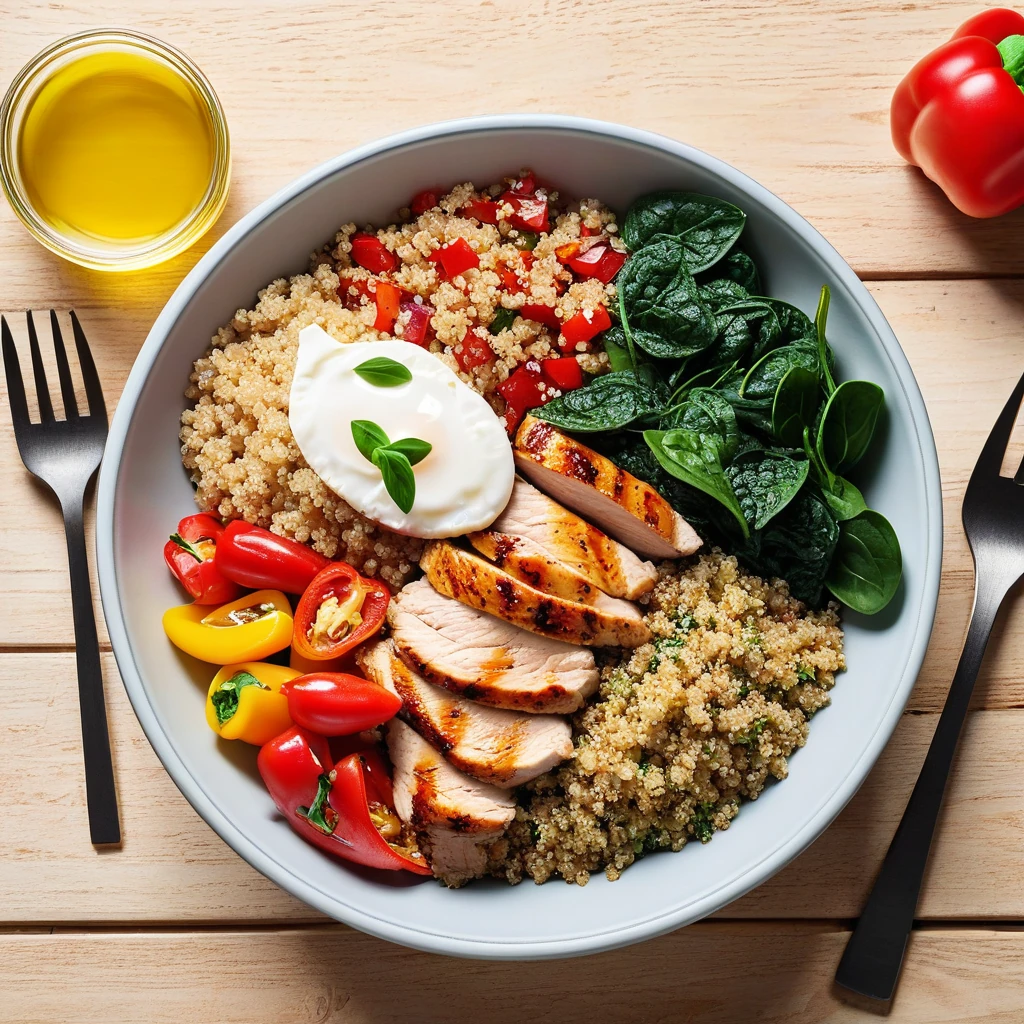
breakfast
Protein-Packed Quinoa Bowl
A nutritious bowl filled with quinoa, grilled chicken, and fresh vegetables, perfect for a balanced breakfast.
No ratings yet
45 min4530 kcal·P372g·C496g·F158g
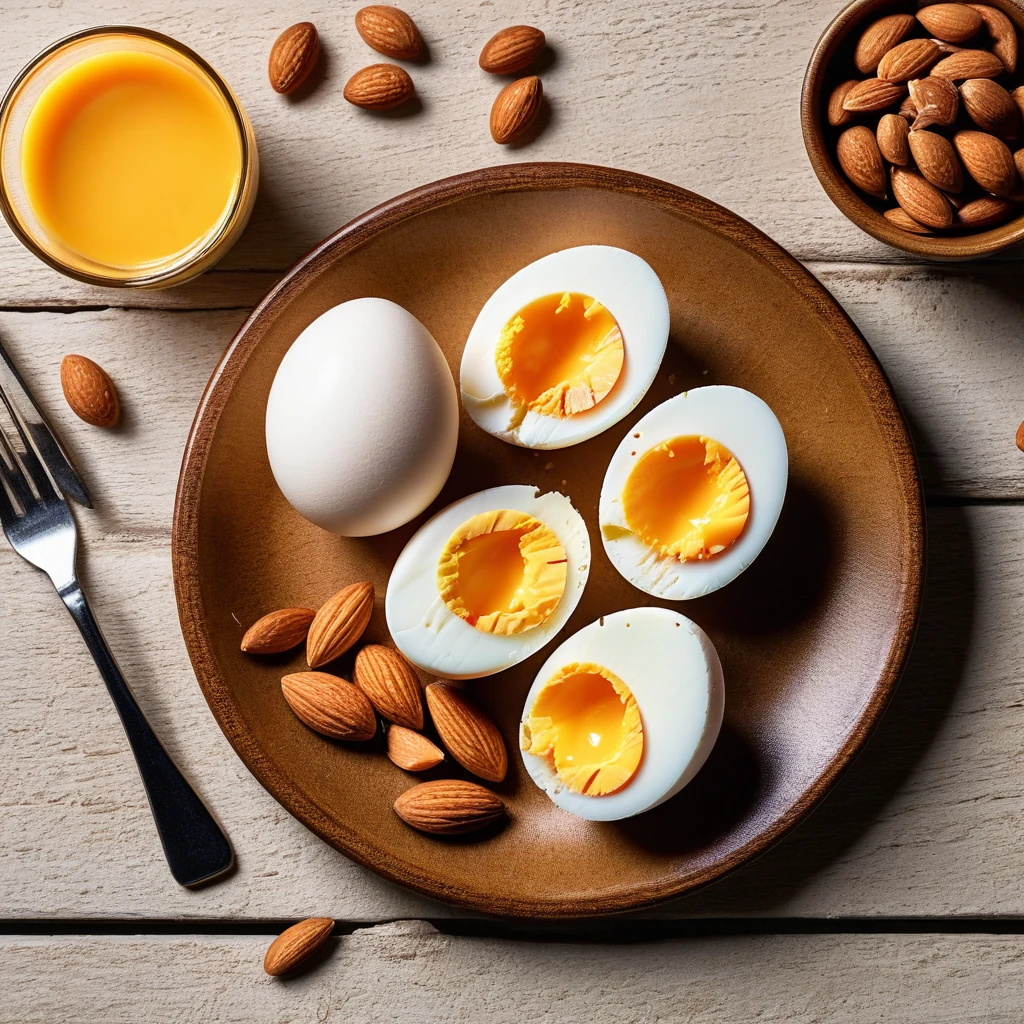
afternoon_snack
Hard-Boiled Eggs with Cheddar Cheese and Almonds
Protein-rich snack with hard-boiled eggs, sharp cheddar cheese, and roasted almonds
No ratings yet
17 min457 kcal·P26g·C8g·F37g
breakfast
breakfast
Breakfast: Grilled Chicken and Vegetable Omelette
A high-protein breakfast featuring grilled chicken, eggs, broccoli, and bell pepper with a touch of olive oil.
No ratings yet
25 min567 kcal·P73g·C13g·F28g
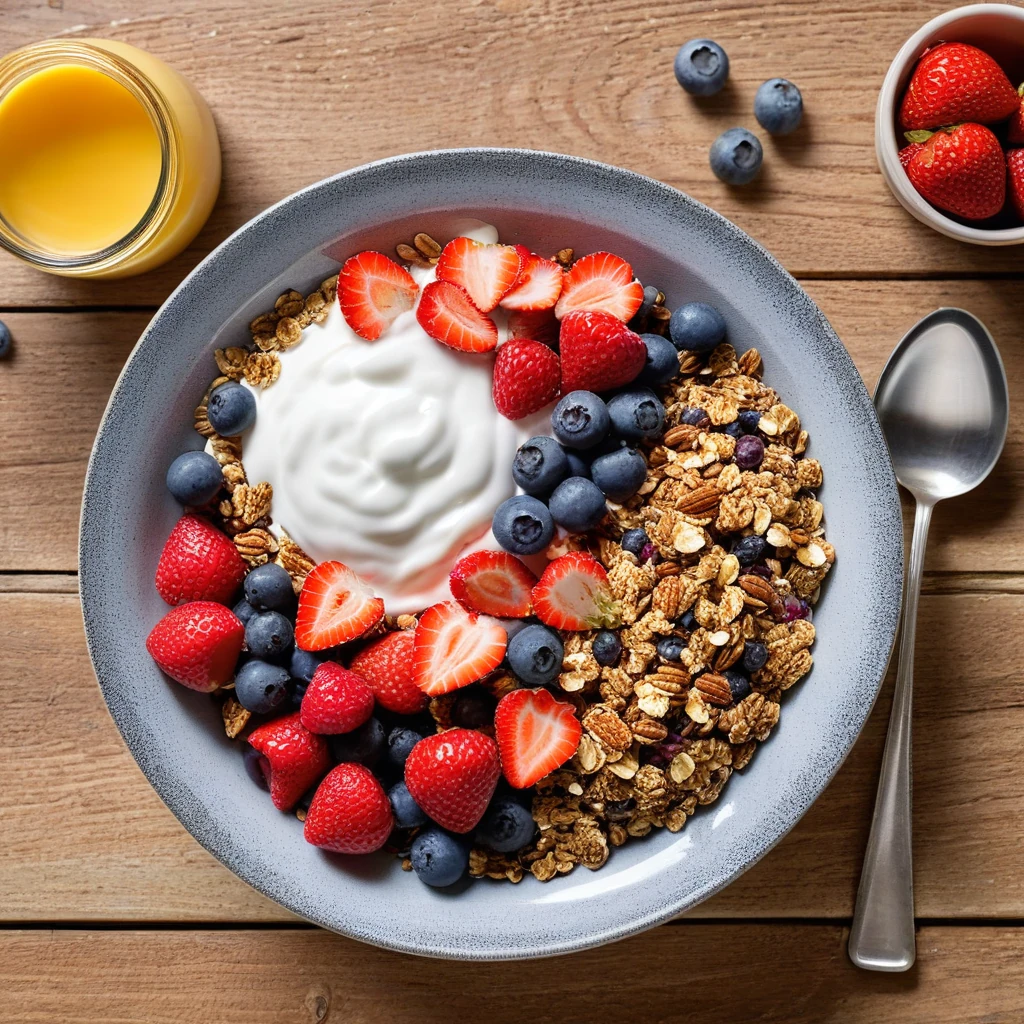
snack
Greek Yogurt Parfait with Berries and Granola
A delicious and nutritious Greek yogurt parfait layered with fresh berries and crunchy granola, perfect for a satisfying snack.
No ratings yet
10 min639 kcal·P40g·C80g·F17g
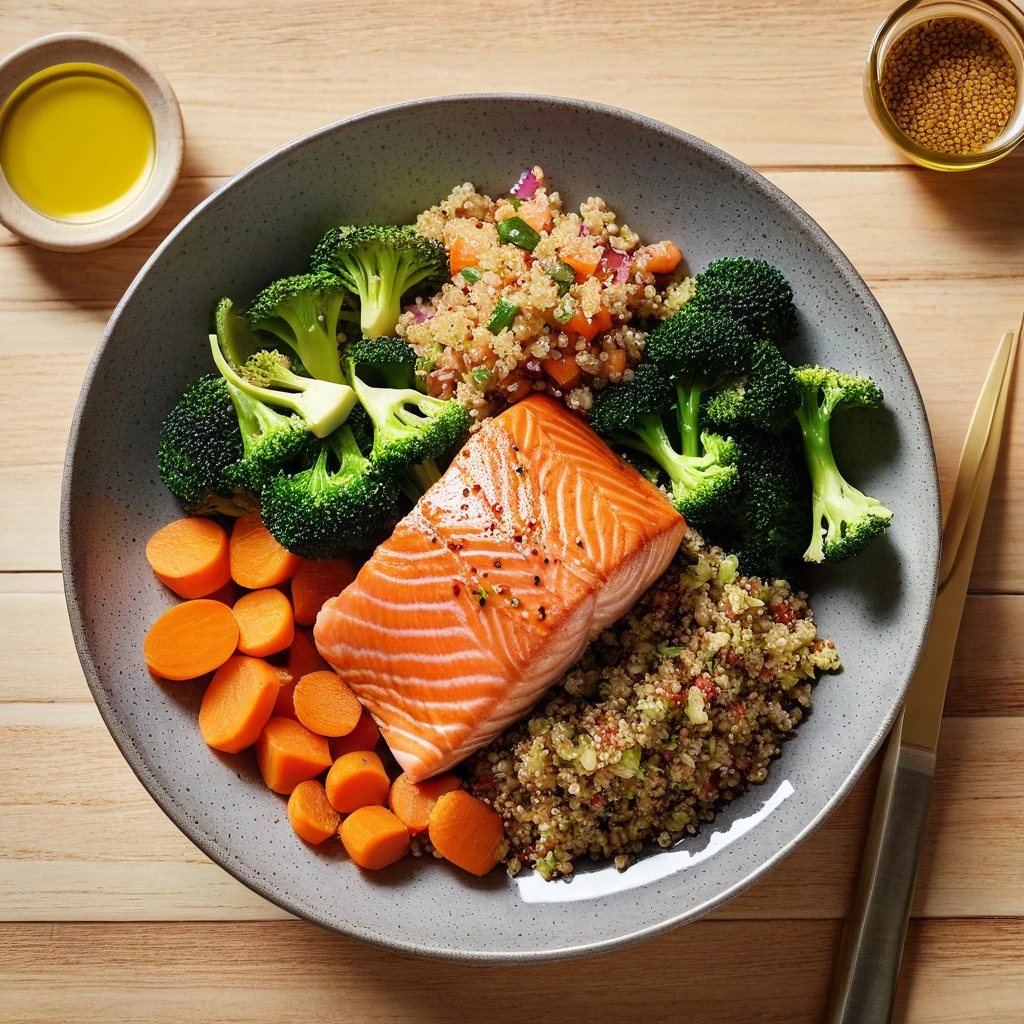
dinner
Sustainable Salmon Quinoa Bowl
A nutritious bowl filled with grilled sustainable salmon, quinoa, and a medley of colorful vegetables, drizzled with a lemon-tahini dressing, perfect for supporting your health goals.
No ratings yet
35 min700 kcal·P52g·C70g·F23g
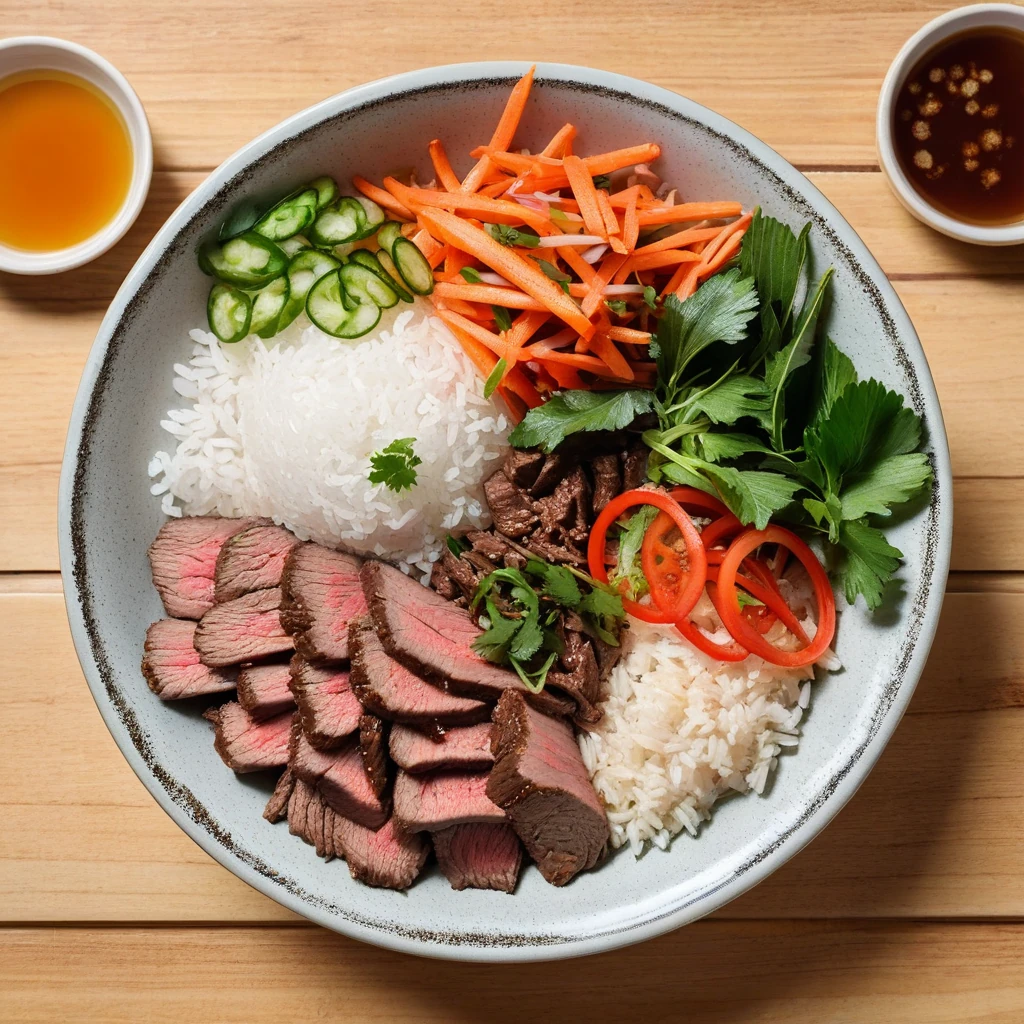
lunch
Vietnamese Beef Banh Mi Bowl
Marinated beef with pickled vegetables, cilantro, and crispy shallots over rice
No ratings yet
35 min985 kcal·P72g·C107g·F27g
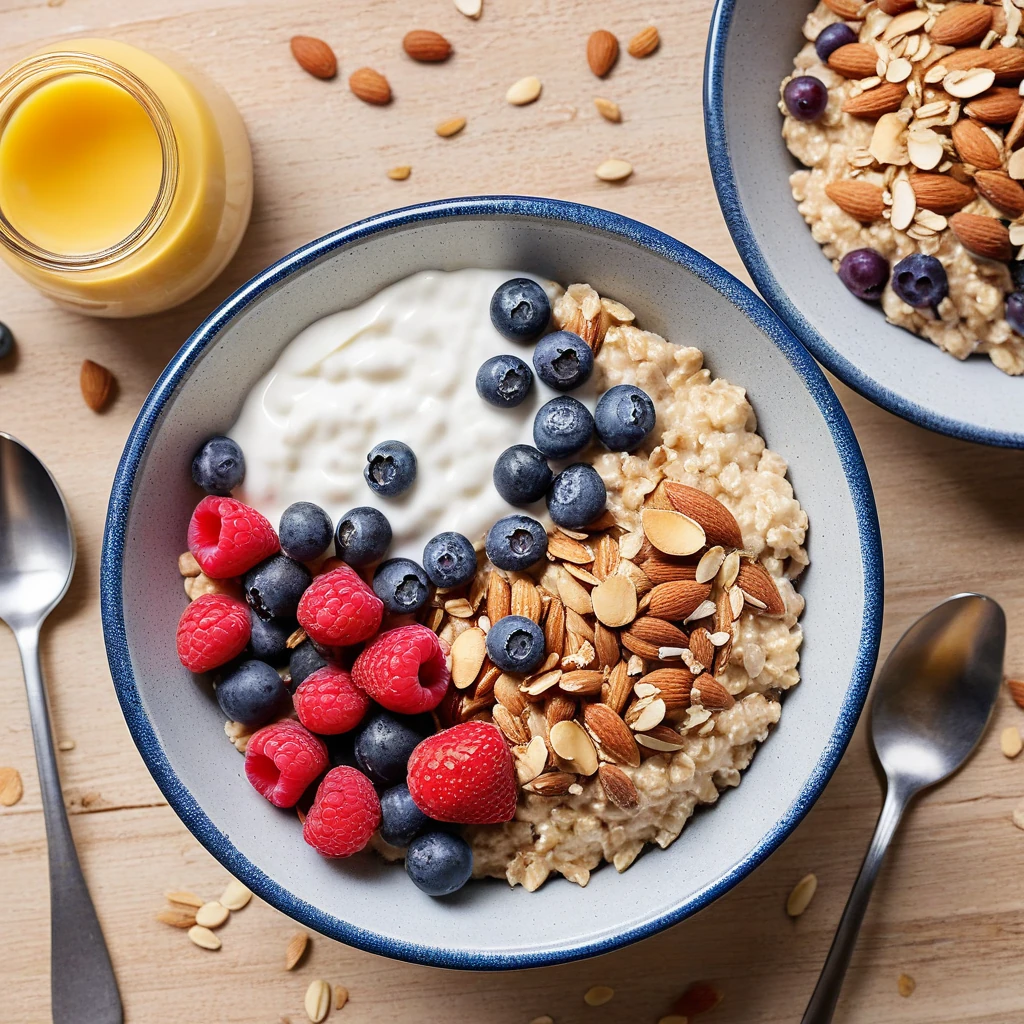
breakfast
Oatmeal with Berries and Almonds
Creamy oatmeal topped with fresh berries, sliced almonds, and a drizzle of honey for a nutritious morning start
No ratings yet
13 min454 kcal·P36g·C47g·F16g
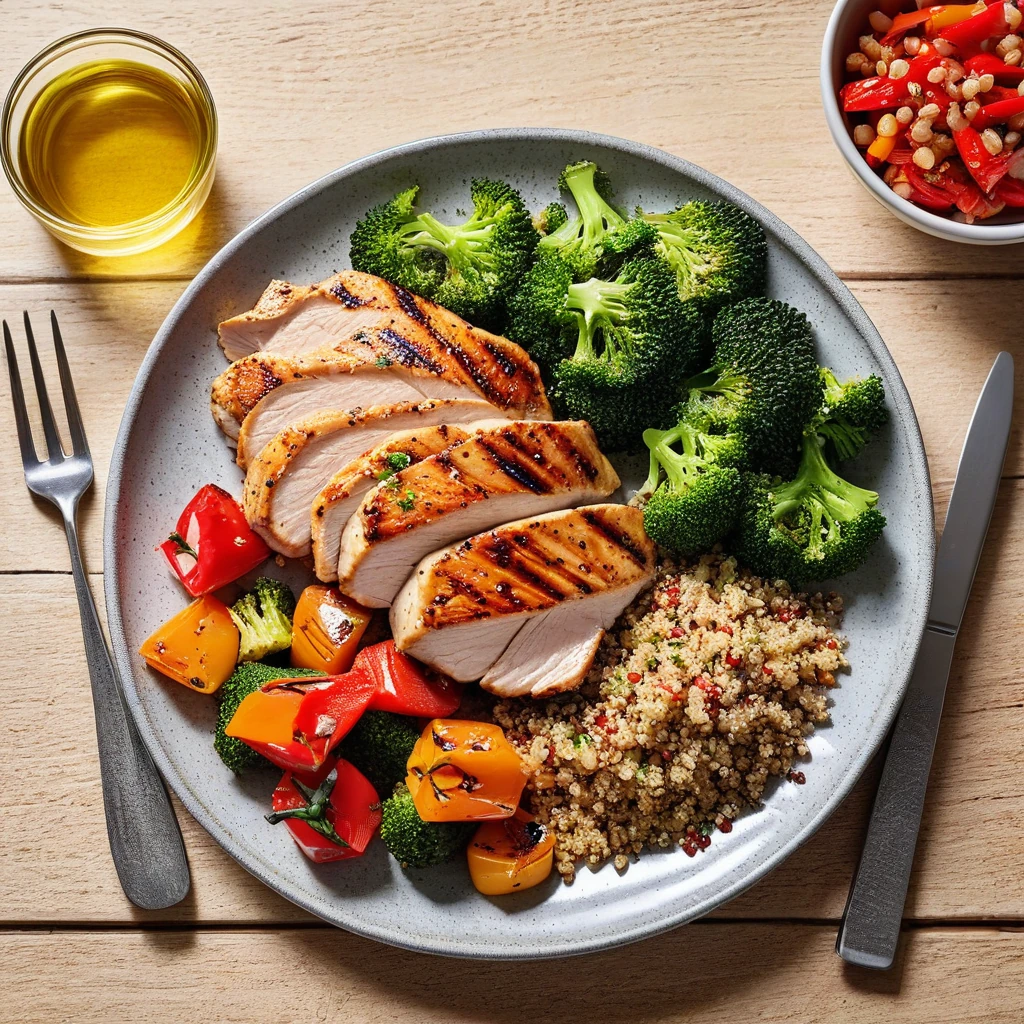
lunch
Grilled Chicken Breast with Quinoa and Vegetables
Lean grilled chicken breast served with fluffy quinoa, roasted broccoli, and bell peppers
No ratings yet
40 min761 kcal·P57g·C76g·F26g
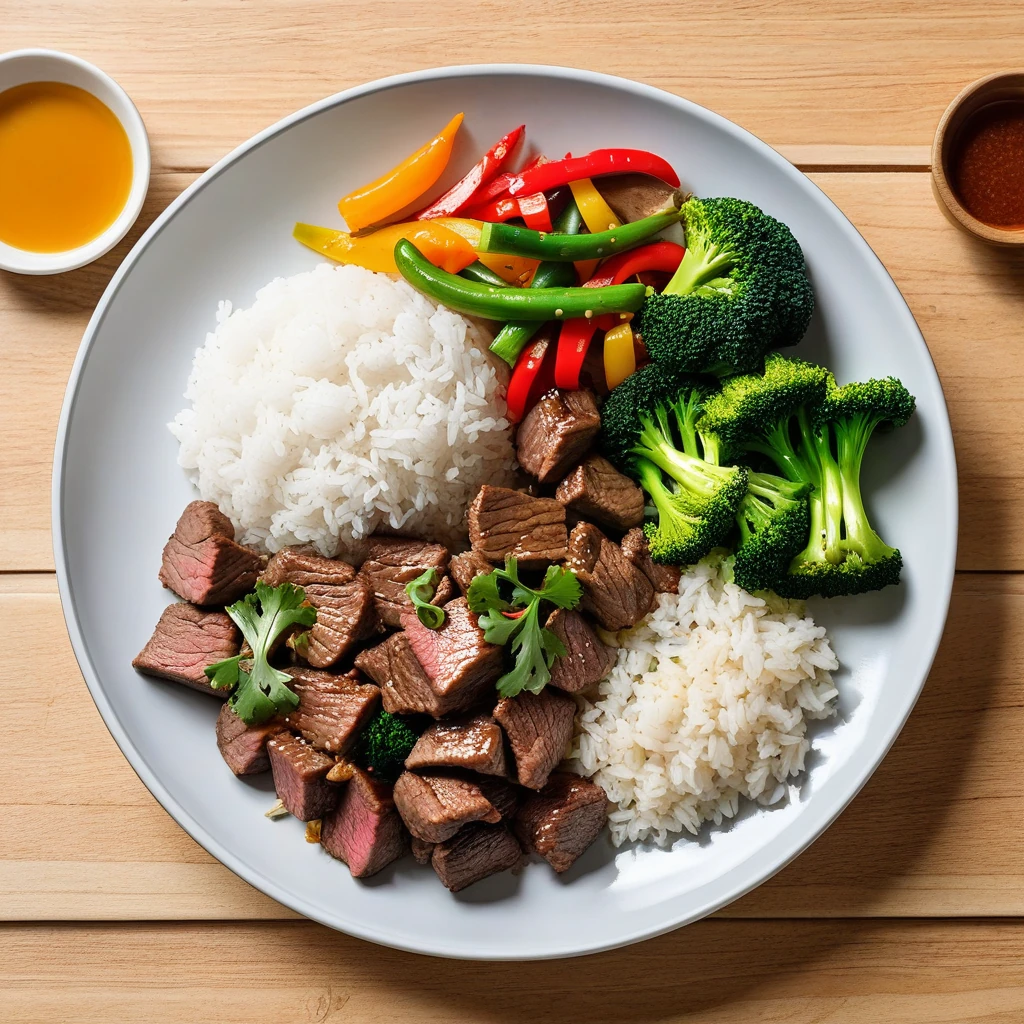
lunch
Beef and Vegetable Stir-Fry with Jasmine Rice
Tender lean beef strips stir-fried with colorful vegetables including bell peppers, broccoli, and snap peas, served over fluffy jasmine rice with a light ginger-soy sauce
No ratings yet
35 min813 kcal·P69g·C74g·F25g
dinner
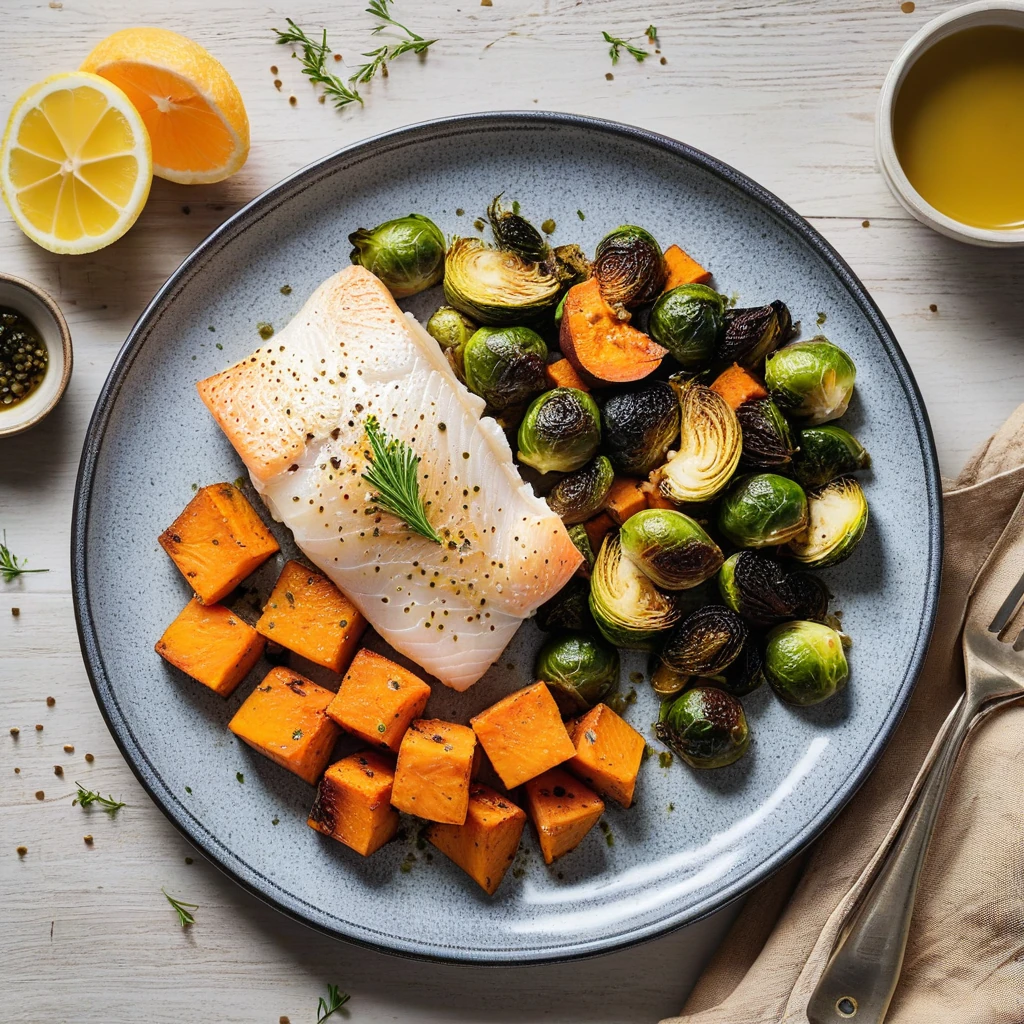
Baked Cod with Roasted Brussels Sprouts and Sweet Potato
Flaky white fish seasoned with herbs and lemon, paired with crispy roasted Brussels sprouts and creamy sweet potato for a light yet satisfying dinner
No ratings yet
35 min504 kcal·P38g·C50g·F17g
breakfast
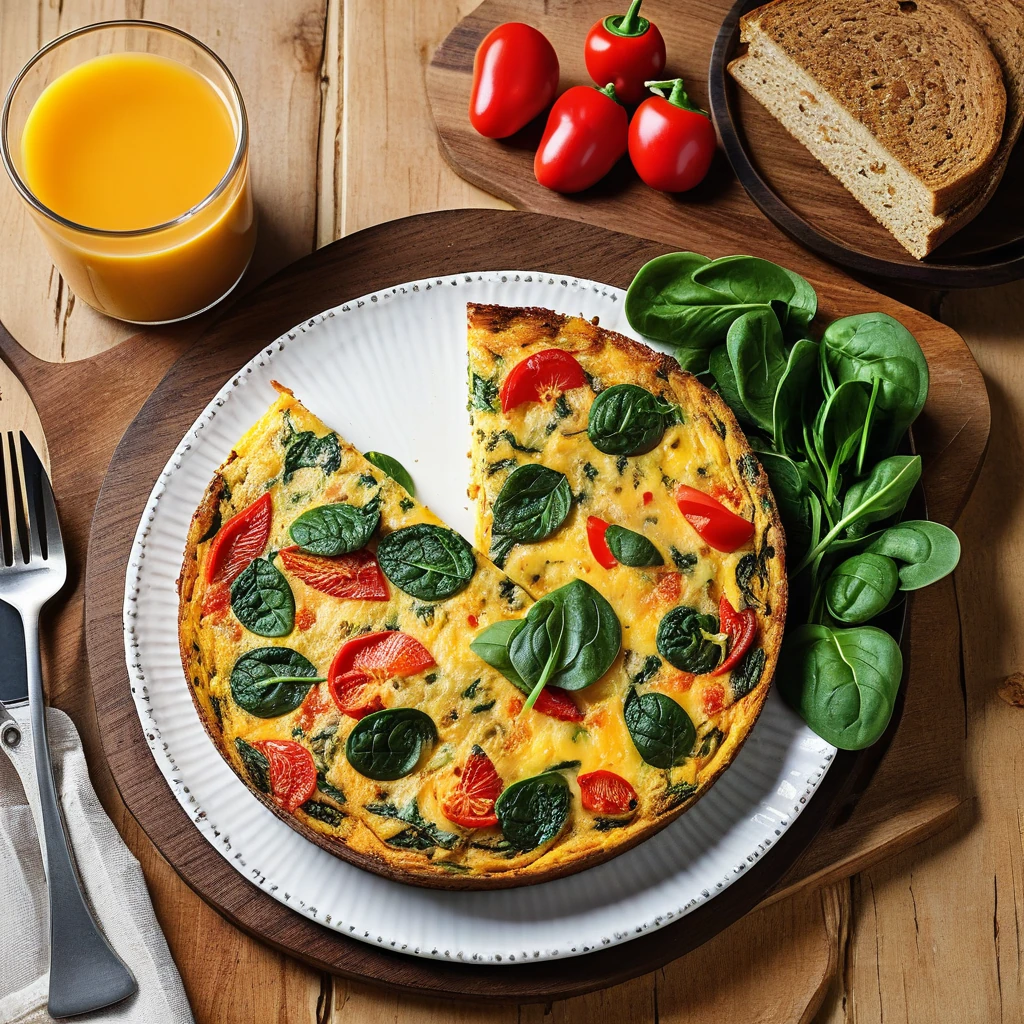
Veggie and Cheese Breakfast Frittata
Fluffy baked frittata with bell peppers, spinach, and cheddar cheese, served with whole grain toast
No ratings yet
25 min525 kcal·P40g·C54g·F18g
breakfast
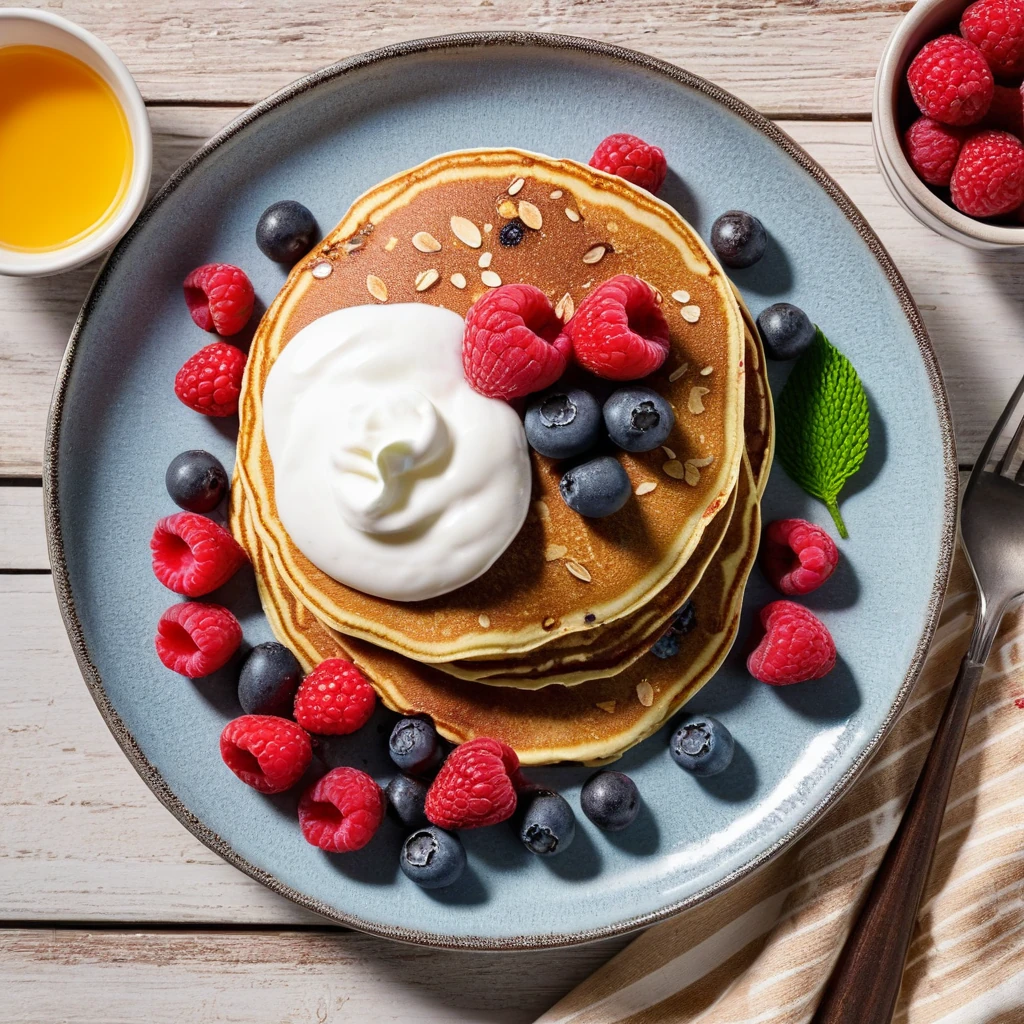
Protein Pancakes with Berries and Greek Yogurt
Fluffy protein-enriched pancakes topped with fresh berries, Greek yogurt, and a drizzle of honey
No ratings yet
22 min404 kcal·P47g·C57g·F16g