Beyond ‘keto’ or ‘vegan’ — tell the AI exactly how you eat
Activity, goals, macros, 26+ diet types, medical conditions, allergies, vitamins, nutrient targets, per-meal calorie distribution. The LLM sees all of it as structured context.
- USDA-grounded macros
- Clinical equations (Mifflin-St Jeor)
- Medical, allergy, vitamin layers
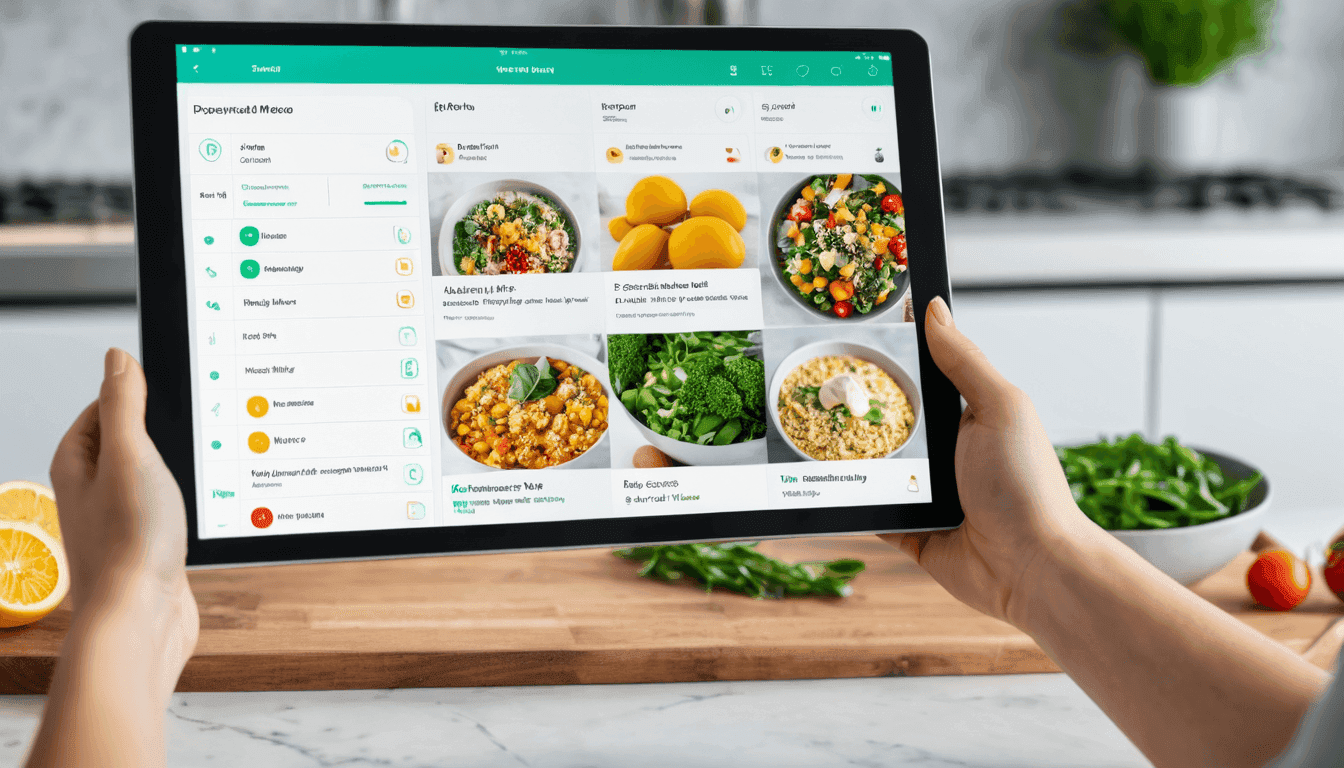
A nutrition profile tells the AI exactly how one person eats — activity level, goal, calorie target, macro ratios, 26+ diet types, medical conditions, allergies, vitamins and per-meal calorie split. One person can have several profiles and swap between them per plan.
When someone in my house has Type 2 diabetes and another is training for a marathon, I want one tool that respects both constraints at once.
How target calories are calculated
Mifflin-St Jeor — the clinical standard since 1990 — multiplied by an activity factor and adjusted for your goal.
BMR = 10 × weight(kg) + 6.25 × height(cm) − 5 × age + 5
TDEE = BMR × activity multiplier
Goal: WEIGHT_LOSS → TDEE × 0.8   |   MAINTENANCE → TDEE   |   MUSCLE_GAIN → TDEE × 1.15
Activity multipliers
- Sedentary: 1.2
- Light: 1.375
- Moderate: 1.55
- Active: 1.725
- Very Active: 1.9
Macro ratios with live gram equivalents
Sliders render the grams a 2,000 kcal target translates to. Protein and carbs at 4 kcal per gram, fat at 9.
Protein
Protein 10–60 % · default 30 %
Fat
Fat 10–60 % · default 30 %
Carbs
Carbs 10–70 % · default 40 %
Client-side warning if macros don't sum to 100 %. Server stores the values as-is so you can explore non-standard splits.
26+ diet options to pick from
Pick the one that matches how you actually want to eat. Your choice becomes a strict rule the AI has to follow on every recipe.
General Health
Mediterranean · DASH · Flexitarian · Whole30 · Paleo
Weight Management
Keto · Low-Carb · Intermittent Fasting · Volumetrics · Zero-Carb
Athletic & Sports
High-Protein · Carb-Cycling · Cutting · Bulking · Endurance Athlete · Strength Athlete
Specialized
Vegan · Vegetarian · Gluten-Free · Dairy-Free
What the AI reads from your profile
Everything you filled in becomes context the AI uses when writing your meals. Nothing gets ignored, nothing gets added that you didn’t ask for.
Your daily calorie target
e.g. 2,000 kcal — calculated from your age, height, weight, and activity level.
Your macro split
e.g. 30 % protein, 30 % fat, 40 % carbs — as grams per meal.
Your preferred diet
e.g. Mediterranean, Keto, Vegan — steers the style of every recipe.
Medical conditions to consider
e.g. Diabetes, high blood pressure — the AI avoids trigger ingredients.
Allergies & intolerances
e.g. Shellfish, peanuts, gluten — treated as hard rules, never bent.
Vitamins & minerals to prioritise
e.g. Vitamin D, iron, calcium — the AI favours foods rich in these.
Nutrient targets
e.g. 25 g fibre, ≤2,300 mg sodium — soft caps the AI aims for.
Any custom notes you wrote
e.g. ‘Avoid nightshades, I love bone broth’ — read as extra guidance.
How you split calories across meals
e.g. 25 % breakfast, 35 % lunch, 30 % dinner, 10 % snacks — or use the medical default.
Advanced options — the details that make your plan actually yours
Optional, collapsible. Fill in only what matters to you.
Medical conditions
Things like diabetes, high blood pressure, PCOS, or IBS. The AI steers away from ingredients that don’t suit them.
Allergies & intolerances
Shellfish, peanuts, gluten, dairy, eggs — whatever you need to avoid. These are treated as hard rules, never bent.
Vitamins & minerals to emphasise
Vitamin D, iron, calcium, B12, and more. The AI prioritises foods that are rich in what you want to get more of.
Nutrient targets (fibre, sugar, sodium)
Set how much fibre you want, how much sugar to cap, how much sodium to keep under. Sensible defaults shipped.
Custom notes
A plain-English field you can fill freely. Example: ‘Avoid nightshades, I love bone broth.’ The AI reads it as extra guidance.
How calories split across meals
Prefer a big breakfast and a light dinner? Set your own breakfast/lunch/dinner/snack percentages. Or use the medical default.
One person can have several profiles
Keep a ‘cutting’ profile for training season and a ‘maintenance’ one for the rest of the year. Swap between them per plan — no re-entering data.
How a profile looks in the app
Every option on this page becomes a single nutrition-profile card you can reuse across plans.
My NutriProfile 1
The form you'll fill in
Goal, calories, macros, meals, and restrictions — all in one card.
Set the goal
A reusable nutrition profile that any meal plan can link to.
Daily targets
Auto-computed from BMR + activity, then editable.
Which meals to plan
Drop snacks if your day is breakfast / lunch / dinner only.
Tell the AI what to avoid
Questions people ask
Short answers.
How accurate are the calorie and macro numbers?
Calorie targets come from a well-established clinical formula (Mifflin-St Jeor) adjusted for your activity level and goal. Macros are calculated from there in grams. Every meal the AI generates is checked against your target — if it misses, it’s rewritten.
Is it safe to list medical conditions?
Your data stays in your account and is never shared. The AI uses it only to avoid trigger ingredients and adjust the plan. This isn’t a medical device — for real medical advice, talk to a clinician.
Are my allergies respected for real?
Yes. Allergies are hard rules. Any recipe that slips a listed ingredient is rejected and rewritten automatically, up to five attempts. A full failure stops the run instead of shipping a risky plan.
Can one person have more than one profile?
Yes. Create as many as you like (cutting, maintenance, holiday, recovery). You pick one per plan when you start.
Where do the nutrition facts come from?
The USDA public food database — the same one dietitians rely on. Every macro and micronutrient in your plan traces back to a real measurement, not an AI guess.
- Reviewed by
- Melio Nutrition & AI Platform Team
- Last updated